
Travelling across Europe shows how varied the experience can be from one place to the next. A coastal drive in western Ireland is defined by landscape and distance, while a few hours in central Florence revolves around streets that have barely shifted in centuries. London’s neighbourhoods carry their own identity block by block, and cities like Strasbourg still centre around historic areas that remain in daily use.
This guide explores a handful of destinations through that lens, focusing on what defines each one on the ground.
Tailored cultural journeys and Scenic routes in Ireland
Ireland’s west coast is best explored by following its natural edges. The route from Galway towards Clifden along the N59 sets the tone, with Lough Inagh opening out on one side and the Twelve Bens rising on the other. From there, the road curves into the Sky Road loop, where short pull-ins open up clear views over the Atlantic and the offshore islands. It’s not a place to rush. Distances are short, but the road itself becomes part of the experience.
The best way to enjoy Ireland trips for seniors is to focus on well-structured, easy-to-navigate routes. Guided journeys often link manageable sections of the Wild Atlantic Way with stops in towns like Westport and Doolin, where streets are compact and easy to explore on foot. There’s usually time to walk through places like Shop Street in Galway or around Eyre Square without needing to cover long distances, with each stop linking clearly to the next.
Further south, the drive into County Kerry introduces a different landscape. Approaching Killarney via the N71 brings you into a network of roads that circle the national park. The stretch past Muckross House and along the lakeshore has a distinct feel compared to the coastal routes further north. From Killarney town centre, streets lead directly toward the park entrances, making it easy to move between built-up areas and open scenery within the same afternoon.
Renaissance art and Tuscan gastronomy in Italy
Florence is often the starting point for Tuscany, and the city’s layout makes it easy to understand why. Most routes begin around Piazza del Duomo, where the cathedral, Baptistery, and Giotto’s Campanile sit within a few steps of each other.
Streets like Via dei Calzaiuoli lead towards Piazza della Signoria, where Palazzo Vecchio and the Uffizi mark the city’s role in the Renaissance. Crossing Ponte Vecchio brings you into the Oltrarno, while areas like Sant’Ambrogio and San Lorenzo are anchored by daily markets selling fresh produce, cured meats, and regional cheeses.
Leaving Florence by train or car opens up the wider region. Siena sits about an hour away, with roads leading into Piazza del Campo. From there, streets like Via di Città run towards the Duomo, passing bakeries and small food shops along the way. In smaller towns, weekly markets take over central squares, where seasonal produce and local goods are still being sold in the same places for generations.
Further south, the Val d’Orcia opens into wide stretches of countryside. Roads link Pienza, San Quirico d’Orcia, and Montalcino in a clear sequence, with each town centred around a small main square. Local products reflect what’s grown in the surrounding fields and vineyards, from pecorino in Pienza to Brunello in Montalcino.
Literary history and boutique elegance in England
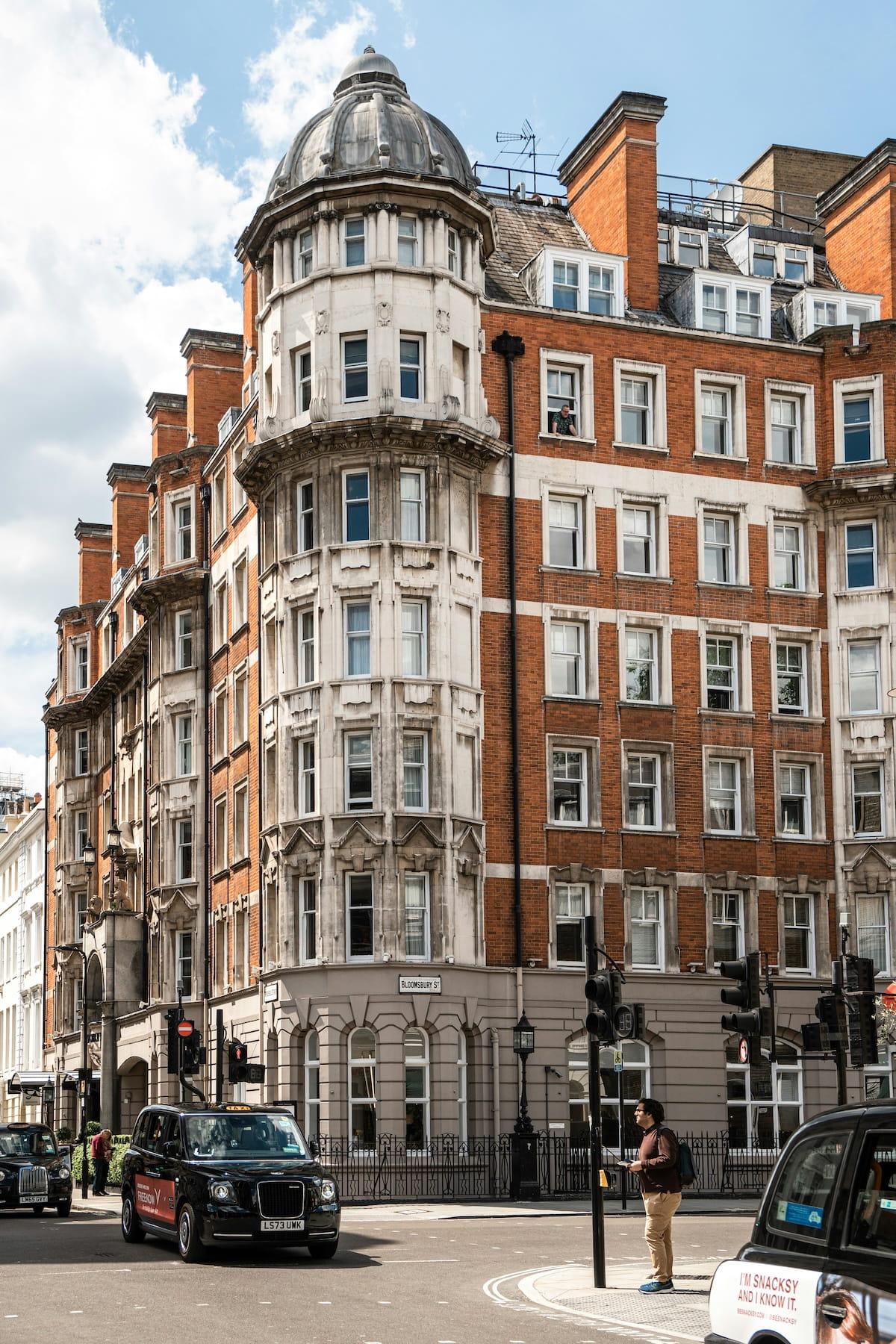
London’s Bloomsbury sits in a part of the city where everything feels closely connected. Starting near Russell Square, it’s easy to walk towards the British Museum, then across to Bloomsbury Square and down towards Holborn. Streets like Great Russell Street and Montague Place link these points with little effort, and the layout quickly becomes familiar.
Choosing to stay in a Bloomsbury hotel in London places you within this network, shaping the way you experience the city. From here, you can walk north towards the Brunswick Centre or head south to Covent Garden in under fifteen minutes. The surrounding streets are lined with Georgian terraces and small squares, and the area’s literary connections become clearer as you move between places linked to the writers who once lived and worked here.
Moving west, the route towards Soho changes the overall feel. Streets narrow, traffic increases, and the pace shifts as you reach areas around Oxford Street and Tottenham Court Road. From there, continuing on foot into Fitzrovia or down towards the Strand helps you see how these districts connect.
Medieval architecture and riverfront charm in France
Strasbourg is a good example of how a historic centre still functions as a working city. The area around Grande Île is enclosed by the River Ill, with most routes crossing one of its bridges into the old town. Starting at Place Kléber, it’s a short walk into narrower streets that gradually open out at the cathedral square.
Strasbourg is a good example of how a historic centre still functions as a working city. The area around Grande Île is enclosed by the River Ill, with most routes crossing one of its bridges into the old town. Starting at Place Kléber, it’s a short walk into narrower streets that gradually open out at the cathedral square.
Following the river east leads into more residential parts of the city, where wider streets and open spaces shift the pace. Cycling routes run alongside the water, connecting different districts without needing public transport.
Alpine vistas and lakeside retreats in Switzerland
Lucerne is often used as a base for exploring central Switzerland, largely because of its transport links. The old town sits along the Reuss River, with Kapellbrücke connecting both sides. From there, streets lead towards the lakefront, where boat routes depart regularly for towns along Lake Lucerne. It’s easy to move between water and rail here, which shapes how most visitors explore the region.
Taking the train south towards Interlaken opens up a different landscape, with the route passing lakes and climbing gradually into the Bernese Oberland. Once there, the town itself sits between Lake Thun and Lake Brienz, and paths along the water connect to nearby stations. It’s easy to continue further into the mountains using local trains that run up into valleys like Lauterbrunnen.
Within these valleys, the pace shifts. From Lauterbrunnen village, paths lead past Staubbach Falls and on to cable car stations that carry you higher into the mountains. The infrastructure follows the terrain, so each stage of the journey unfolds in a clear sequence, from lakeside towns to alpine villages and beyond.
Which European classic will you rediscover?
Each of these places reveals itself through the details you notice once you’re there. In Ireland, the shift between small towns and the open coastline stands out. In Tuscany, daily life still centres around markets and historic streets. London’s neighbourhoods change character within a few blocks, while Strasbourg’s old town continues to function as part of the city’s everyday routine.
In Switzerland, the setting shapes everything from lakeside towns to higher alpine villages. After a few hours in each place, the layout, daily activity, and surroundings start to make sense.






discuss
Email
Pin
Tweet
Share