

Luxury travel has shifted away from standard five-star checklists toward experiences that feel grounded in place. What matters now is how travellers move through a destination and the kind of access they have once they arrive. It might mean stepping into a quiet Kyoto backstreet before the crowds reach Gion, or landing on a remote airstrip in the Okavango Delta, where the only sound is the aircraft cooling down.
The destinations below reflect that shift. Each one offers more than comfort, whether through access, perspective, or a deeper way of experiencing a place that most visitors only pass through.
Tailored cultural journeys through Imperial Japan
Arriving in Kyoto, most routes naturally begin in Higashiyama. Walking uphill from Kiyomizu-dera towards Sannenzaka and Ninenzaka, the streets narrow quickly, and in the early morning, you are more likely to pass locals opening shop shutters than any tour groups. From there, it is an easy walk north towards Gion, crossing the Kamo River, where the pace changes once again.
The most amazing Japan vacation packages usually follow itineraries that reflect these natural neighbourhood connections instead of jumping between cities. A well-designed route might move from Kyoto’s eastern districts to Arashiyama via the JR Sagano Line, then continue to Kanazawa, where Kenrokuen Garden and the preserved streets of Higashi Chaya fit naturally into a slower, walkable day. The focus stays on how places connect, not just which landmarks to tick off.
In Tokyo, the contrast is sharper. Starting in Asakusa around Senso-ji, then moving west toward Ueno Park and Ameya-Yokocho market, the city reveals itself in layers. By the time travellers reach Omotesando or Daikanyama, the rhythm has shifted again, and that’s where the value of a tailored journey becomes clear.
Private island retreats in the Maldives
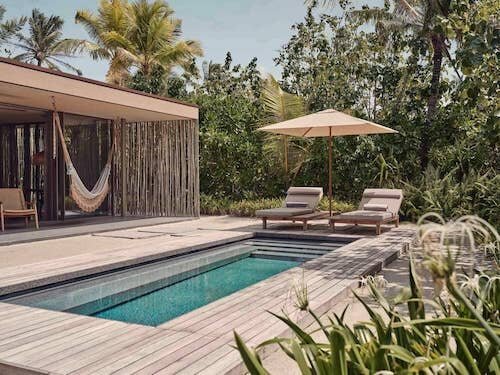
Arriving by seaplane sets the tone, but what matters more is how each island is laid out once you’re on the ground. Some of the smaller islands can be walked end to end in under fifteen minutes, which changes how people move through the day. You’ll often find a single sand path running parallel to the shoreline, with villas branching off toward either sunrise or sunset sides.
The best stays tend to be those where the house reef is accessible directly from the beach. In places around North Malé Atoll or Baa Atoll, it’s common to step into shallow water and reach coral drop-offs within a few metres. That means snorkelling in the Maldives doesn’t require planning or transport. It’s just part of moving around the island.
Evenings usually shift toward the jetty areas, where boats dock and where the light holds longest. Walking out along these wooden paths gives a clear view of how isolated each island actually is. There’s no background noise from neighbouring resorts, just open water and the occasional passing dhoni.
Exclusive VIP access to Global Formula 1
Experiencing Formula 1 properly starts before race day. In places like Monaco, it is worth walking the circuit on foot early in the week, starting at Port Hercule, passing La Rascasse, and continuing up towards Casino Square. The elevation changes are more noticeable than expected, especially on the climb towards Beau Rivage.
Booking a trip with F1 tickets that include paddock or hospitality access changes how the weekend unfolds. Instead of staying in the grandstands, travellers can move between the pit lane, team areas, and quieter viewing spaces where it is easier to follow race strategy, not just watch the cars pass. At circuits like Monza, access routes through the park make it possible to move between corners such as Lesmo and Parabolica without leaving the grounds.
In Singapore, the experience shifts again. The Marina Bay Street Circuit runs through areas that remain walkable even outside race hours, from the waterfront promenade near the Helix Bridge to tighter sections around City Hall. The city’s layout makes it easy to combine the race with everyday movement through the streets, which changes how the event feels.
Bespoke African safaris by private jet
Flying between safari regions by light aircraft, or by private jet for longer distances, changes how itineraries are structured. Instead of committing to one reserve, travellers can move from the Maasai Mara to the Serengeti, then down to the Okavango Delta, without losing time to overland transfers.
In the Mara, most game drives centre around the Talek River and the open plains near Musiara Marsh. It is common to track movement patterns over consecutive days, following crossings or predator activity across specific areas instead of driving without direction. From there, crossing into the Serengeti introduces a different terrain, especially around Seronera, where kopjes break up the landscape.
The Okavango Delta works differently. Movement often takes place by mokoro or small boat through narrow channels, particularly in regions like the Jao Reserve. Landing strips are cut directly into the bush, making arrivals feel immediate. There is little separation between travel and the experience itself, which is part of the appeal.
High-end culinary tours through Northern Italy
In northern Italy, travel routes tend to follow the shape of the landscape instead of regional boundaries. Starting in Milan, it is easy to move through the Navigli district and then head out towards Lake Como by train, arriving in towns like Varenna, where everything sits within walking distance of the ferry.
From there, many routes continue east into Veneto. In Verona, moving from Piazza Bra through Via Mazzini toward Piazza delle Erbe gives a clear sense of how the city connects. By the time travellers reach Venice, it helps to approach from quieter entry points, arriving at Santa Lucia station and walking into Cannaregio instead of heading straight towards San Marco.
Food experiences tend to centre on markets and regional specialities. In Bologna, the Quadrilatero area near Via Rizzoli is compact enough to explore in a single morning, with stalls and small shops that showcase the region’s produce. Travelling between these cities by train keeps the route efficient, with most journeys taking under two hours.
Ready to redefine your travel standards?
Modern luxury travel no longer relies on excess. Instead, it is defined by how close someone can get to the essence of a place. Whether that means walking through Kyoto’s older districts before they fill with crowds, tracking wildlife across East Africa, or standing trackside with direct access to a Formula 1 team, the difference comes down to perspective. The question is not just where to go next, but how differently it can be experienced once you arrive.






discuss
Email
Pin
Tweet
Share