
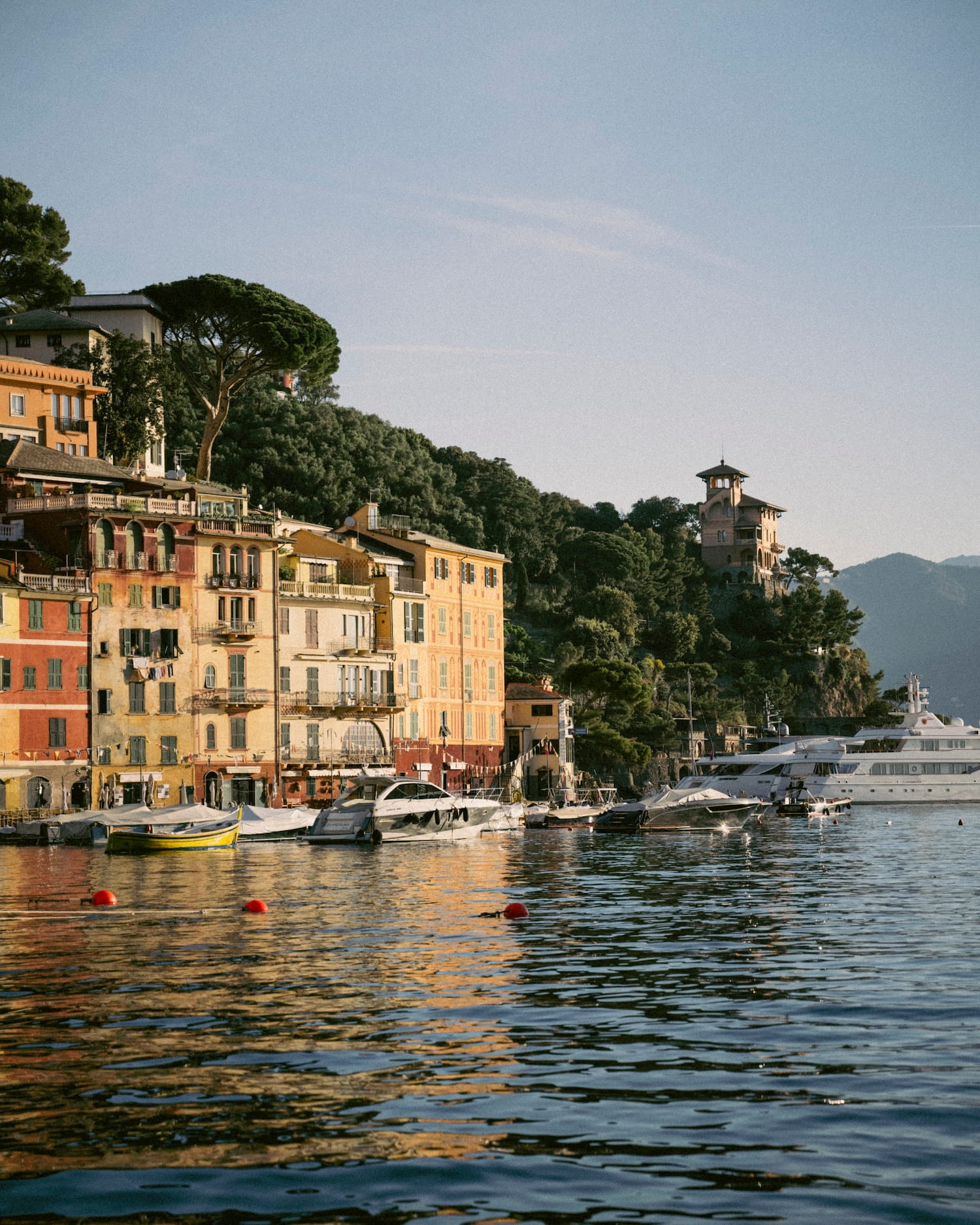
The case against Portofino seems to write itself. ‘Too small, too crowded, too expensive, too famous’ – a village of fewer than 400 residents that receives millions of visitors a year, its harbour reduced to a backdrop for other people’s photographs. You’ve heard it. We’ve heard it. It’s wrong.
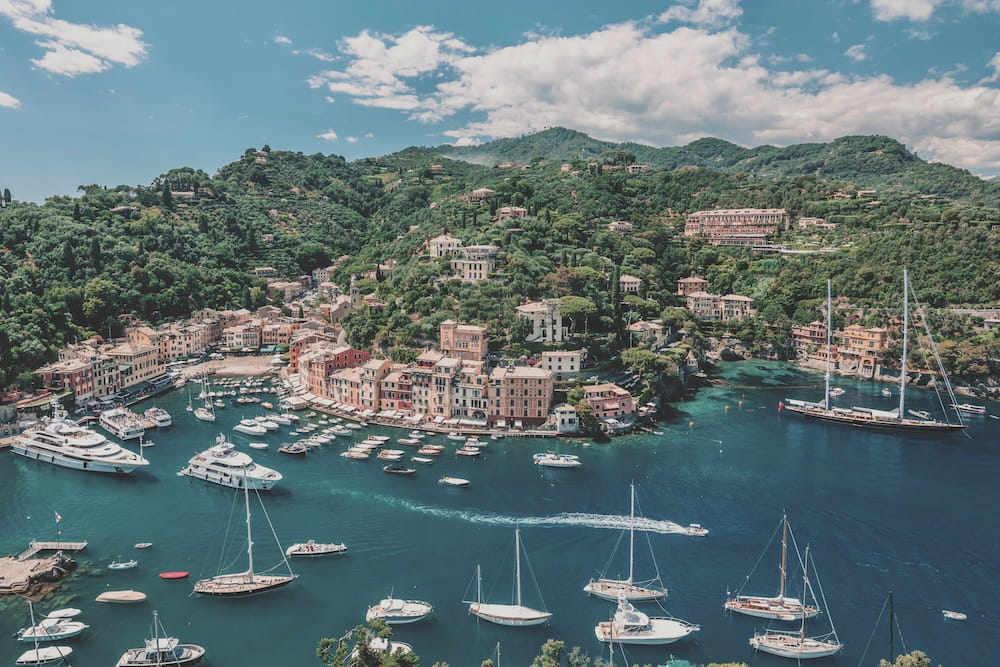
Or rather, it’s a review of the wrong Portofino. The village the critics describe – the one shuffling along at midday in August – is Portofino at its worst hour, seen by people who allocated it ninety minutes between a coach and a ferry. Some places are famous for a reason, and this is one of them: a knuckle of green promontory, a harbour the size of a large swimming pool, ochre and rose facades stacked against protected national parkland, and not a single building out of place. It looks like a film set because for seventy years it has effectively been one. And at night, when the day boats have gone and the piazzetta glows under the castello, it feels like the Italy of a 1960s picture – the kind of evening where you could throw a rope around the moon and pull it in closer.
The trick is not avoiding Portofino. The trick is staying.
First, understand the timing
Portofino’s crowds are not a permanent weather system; they are a schedule. Day visitors arrive from late morning – by ferry from Santa Margherita Ligure and Rapallo, by coach to the car park above the village – and they are largely gone by early evening, because the ferries stop and the coaches leave. The heavy cruise traffic docks in Genoa and comes over for a few hours in the middle of the day; the ships themselves are nowhere near the bay.
Which means the village keeps two entirely different sets of hours. From roughly 11 to 5 in high summer, the piazzetta belongs to the day. Before and after, it belongs to whoever was clever enough to sleep there. Morning Portofino – fishing boats, focaccia, the church bells of San Giorgio, nobody on the harbourfront – and evening Portofino, all long aperitivi and boat lights on black water, are among the great experiences of the Italian coast. They cannot be day-tripped. That is the entire argument of this piece.
Where to stay in Portofino
Belmond effectively holds the keys to the village, with three properties that amount to three different answers to the same question.
Splendido – above the village
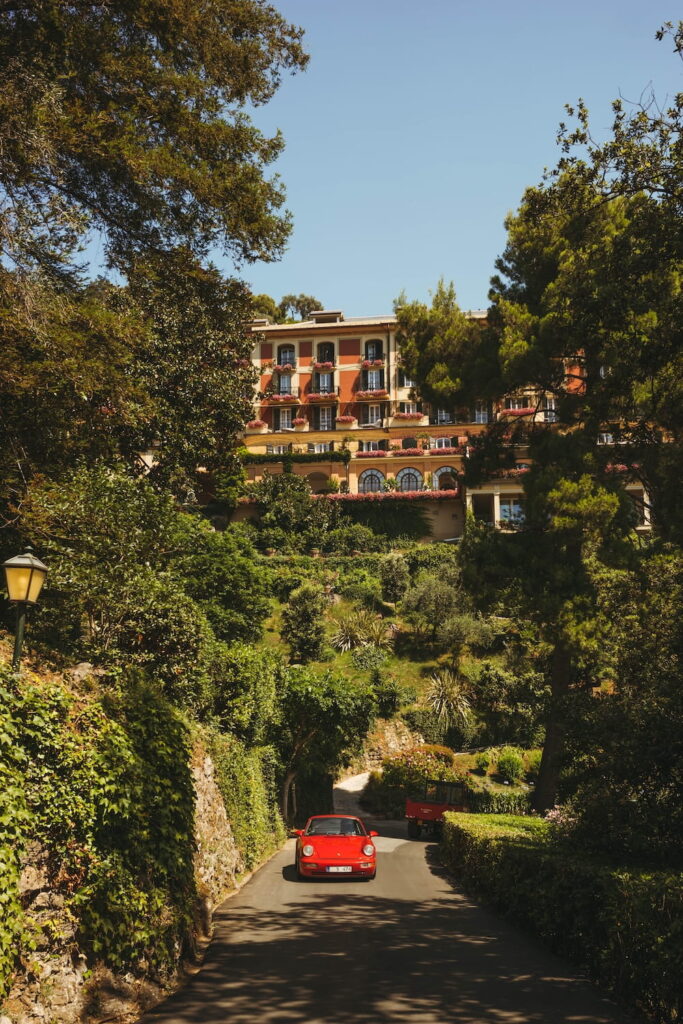
The grande dame, and the reason Portofino became Portofino. A 16th-century Benedictine monastery on the hillside a ten-minute walk above the harbour, Splendido opened as a hotel in 1901 and spent the 1950s and 60s hosting the entire golden age: Bogart and Bacall, Clark Gable, Ava Gardner, the Duke of Windsor, Churchill. Elizabeth Taylor kept coming back – the hotel will tell you she returned with three different husbands, and asked for the same room each time. Madonna chose it for a milestone birthday. The black-and-white photographs on the staircase are not decoration; they are the guest book.
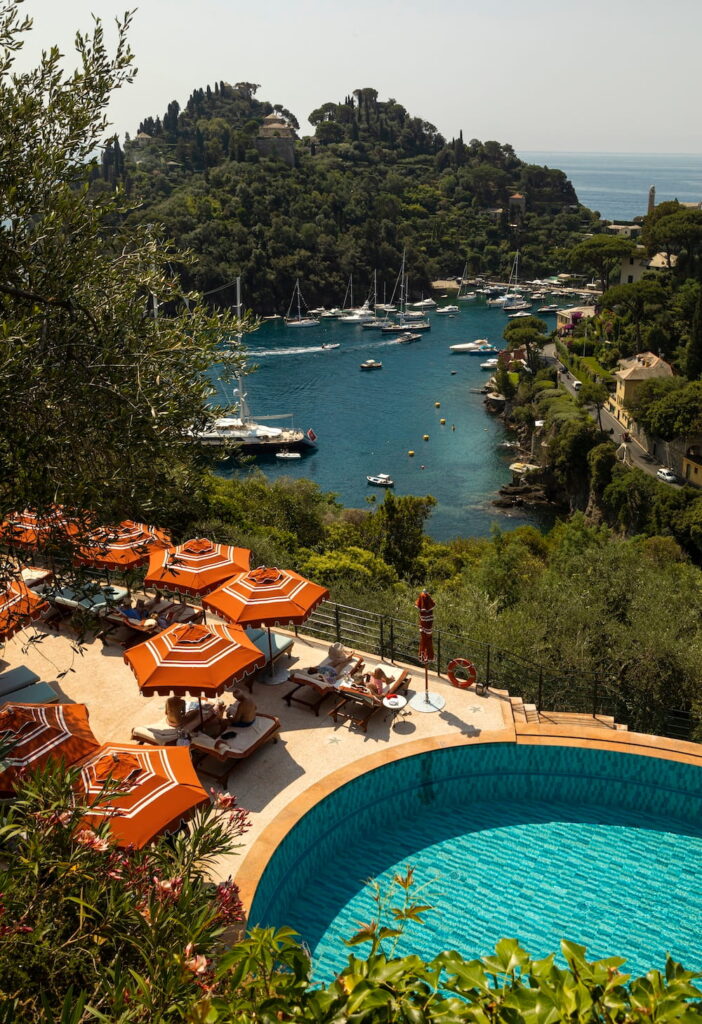
They joke on arrival that Splendido is bigger than Portofino itself, and after a day on the property you see the point. The hotel unfolds in tiers down the hillside – terraced gardens, a saltwater pool above the bay, tennis courts, wildlife in the pines – and its latest renovation, completed by Martin Brudnizki Design Studio in June 2025, added a redesigned cocktail bar and Italy’s first permanent Dior Spa, its treatment cabanas set directly into the gardens. Stay here if you want Portofino framed rather than surrounding you: close enough to walk down for dinner, high enough that the view from your balcony is the one Taylor had.
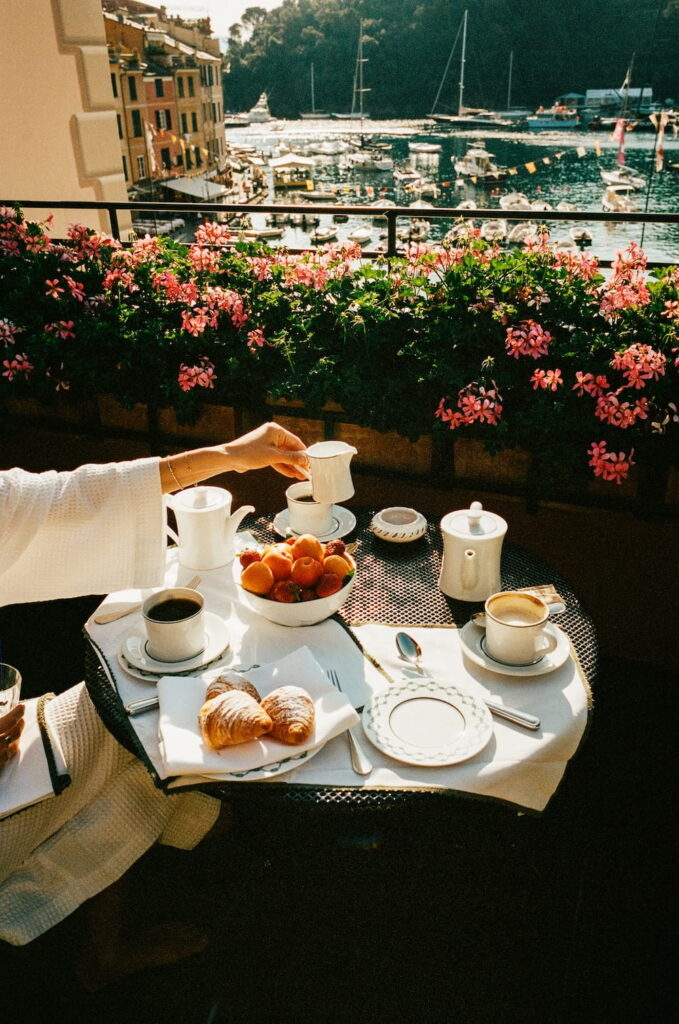
Splendido Mare – in the village
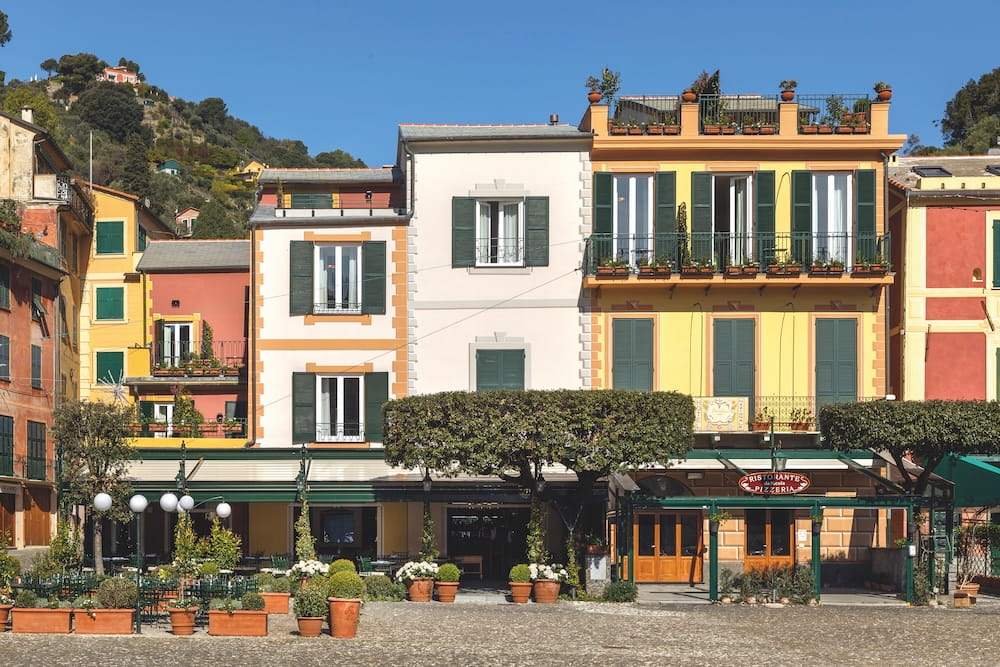
Down on the piazzetta, its sister could not be more different, and that is the point. Splendido Mare is an inconspicuous building right on the port – fourteen rooms, no grand entrance, a small roof terrace – that began life as a guesthouse for fishermen. Inside it is impeccable mid-century Italy: vintage Gio Ponti pieces, Murano glass lamps, furnishings sourced from antique markets, rooms that are all different and mostly come with terraces over the harbour.
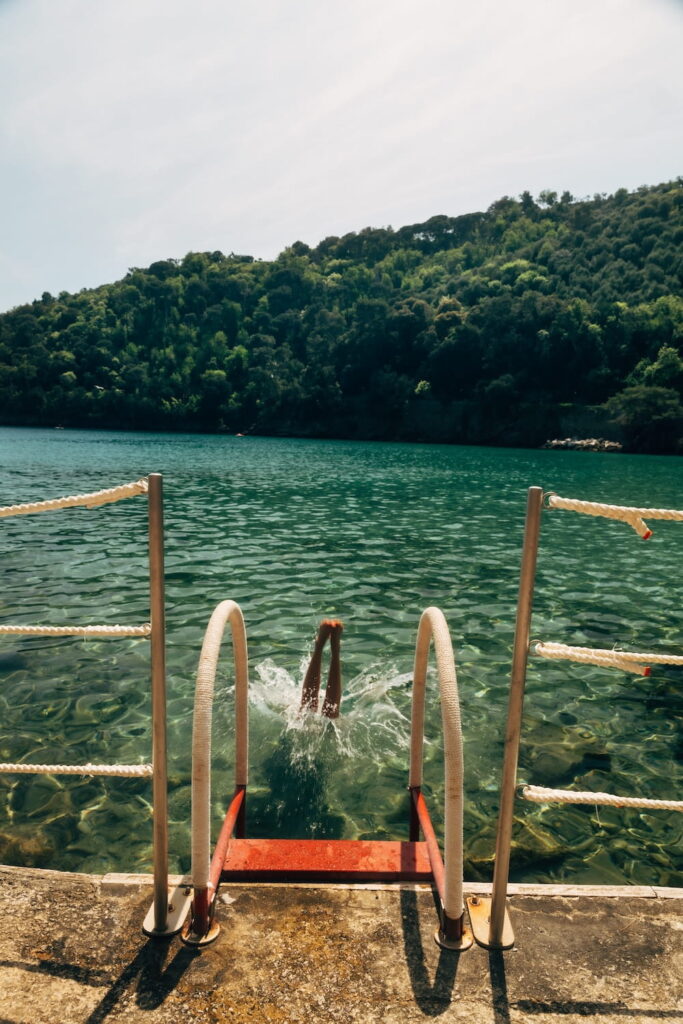
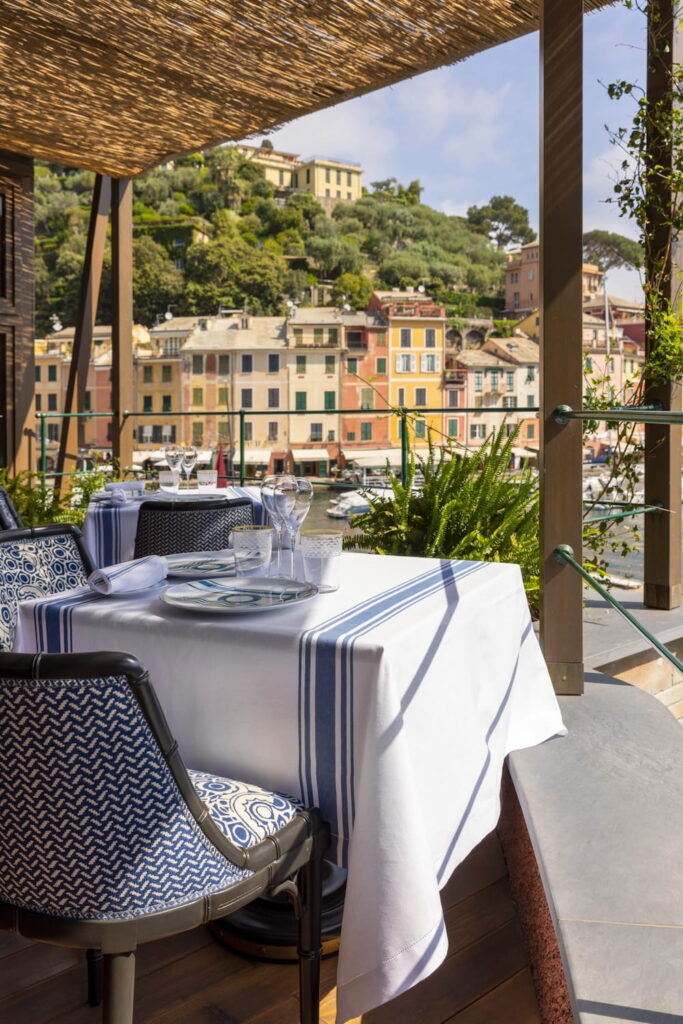
What makes it work is the ecosystem. The house restaurant, DaV Mare, run with the Cerea family of three-Michelin-starred Da Vittorio, is the best table in the village; the hotel also owns Gelateria San Giorgio, the century-old gelateria across the way. Guests get a complimentary tour of the bay on the hotel’s traditional wooden gozzo, and a dedicated lounger at Bagni Fiore, the beautiful beach club in Paraggi ten minutes away, with a shuttle running to and from. It is all completely seamless. Stay here and you are in Portofino – the fishing boats, the morning energy of the port, the elegant bar opening straight onto the harbour – without ever feeling in the thick of it.
Villa Beatrice – the whole-house answer
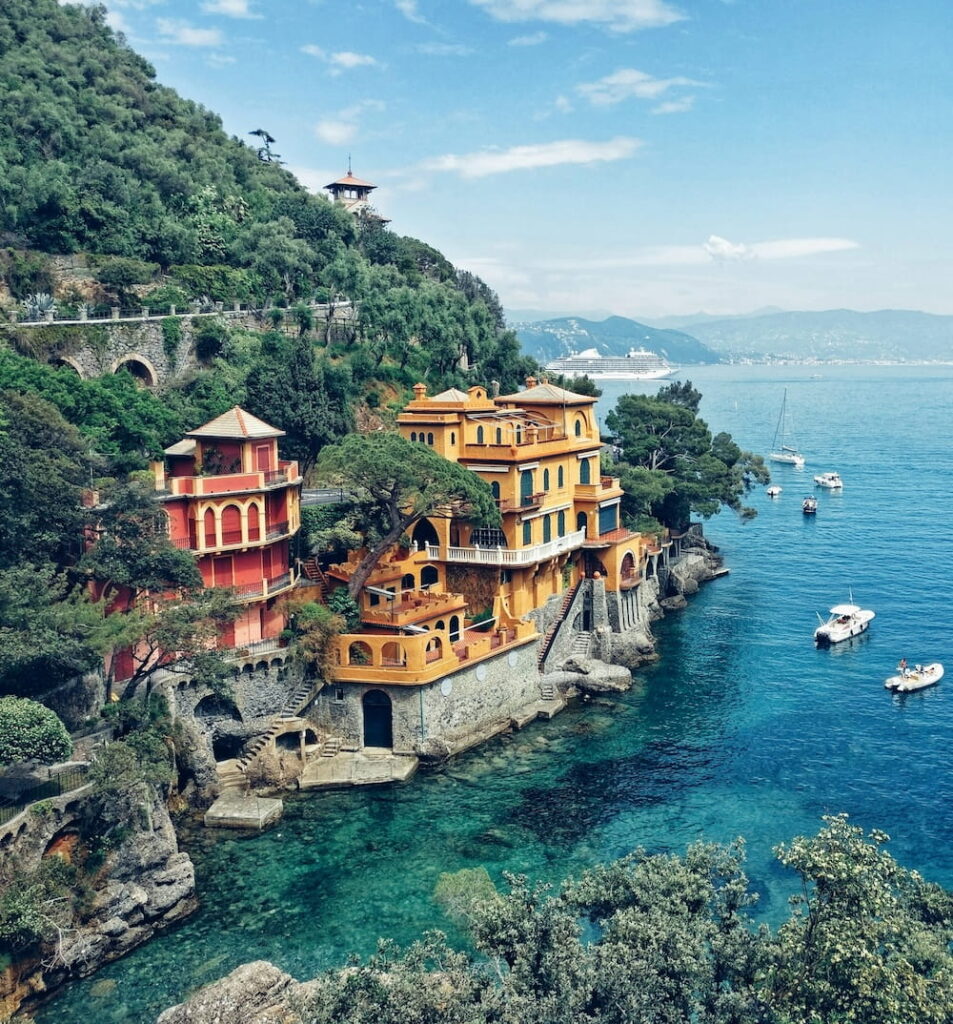
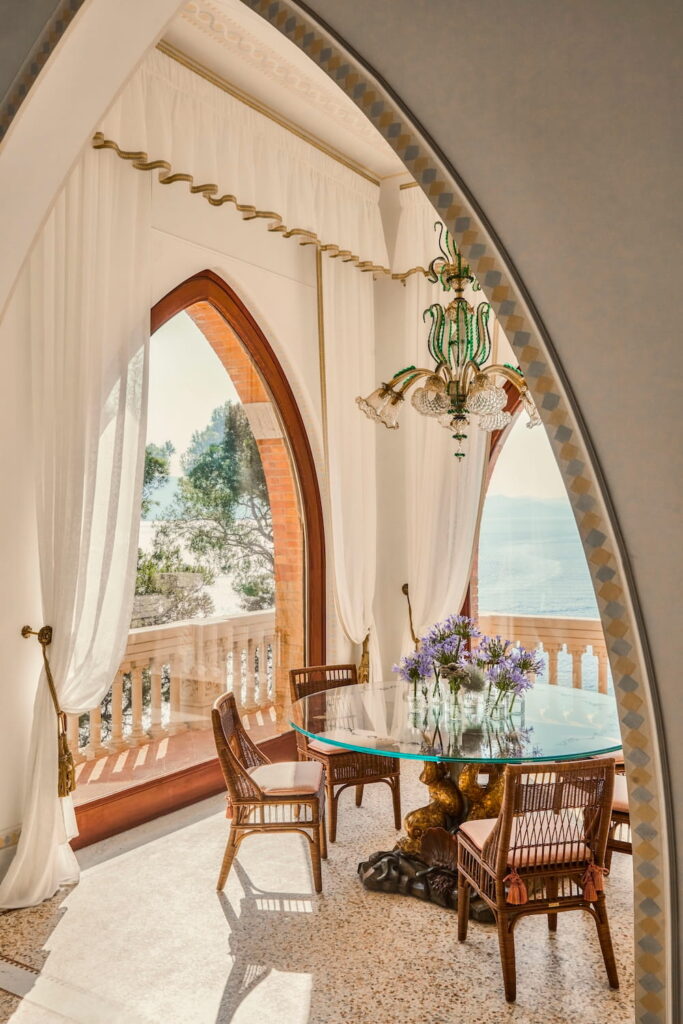
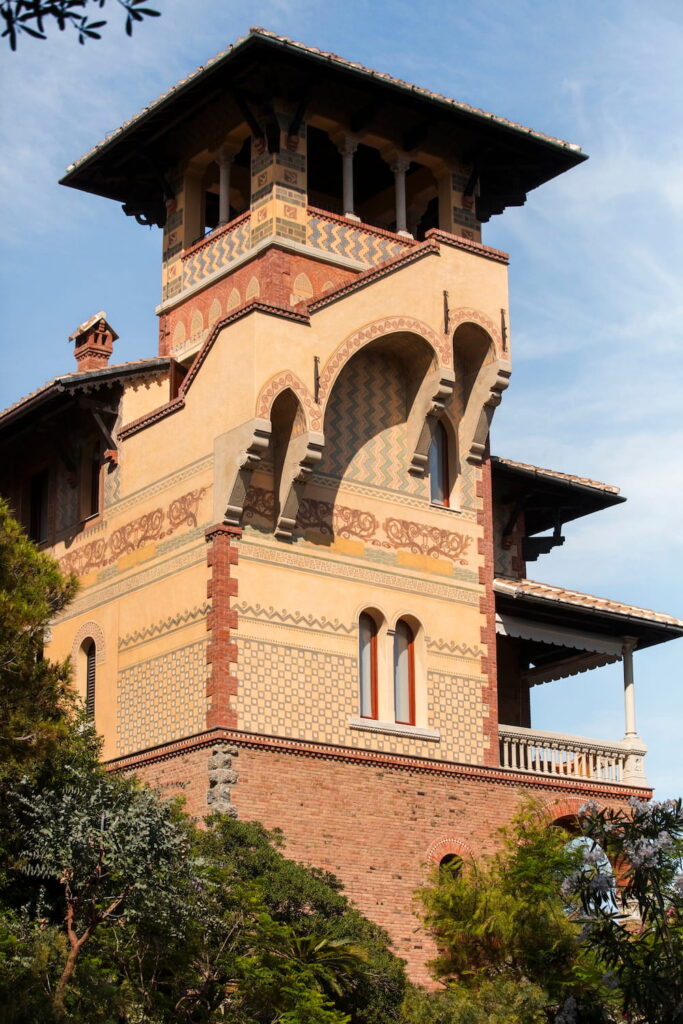
And then there is the mega option. Villa Beatrice, which opened to guests for the first time in summer 2025, is the old-money Portofino fantasy made bookable: a 1913 villa by architect Gino Coppedè on the headland between Portofino and Paraggi, built for shipbuilding magnate Attilio Odero, later home to Enrico Piaggio – the man behind the Vespa – and privately held for over a century before Belmond took it on. Behind its own gates, restored by Martin Brudnizki Design Studio, it is gothic, imposing and improbably peaceful: five keys sleeping ten, including La Casetta, a hidden one-bedroom cottage in the citrus groves, plus tiered gardens over the bay, a pool, a rooftop torretta and – almost unheard of in Portofino – private access to the sea.
It comes fully staffed, with its own chef, its own wine fridge stocked by Splendido’s head sommelier, and all of Splendido’s services on call, while remaining entirely separate. This is how you do Portofino with friends, family and serious money: the village ten minutes away when you want it, invisible when you don’t. The season runs May to early November; pricing, naturally, on request.
Where to eat beyond the hotels
We ate with Belmond throughout – when DaV Mare and La Terrazza are your house restaurants, the incentive to stray is limited – but the village tables with real reputations are worth knowing. Puny, on the piazzetta, is the institution: half a century of writers, industrialists and film people, still commanding the square. Da Ö Batti, up an alley off the harbour, has built its name on a single dish – Scampi alla Batti, prawns in a buttery sauce guarded like a state secret for fifty years. Cracco Portofino brings Carlo Cracco’s fine dining to the Molo, the big-name table for the big night. Panificio Canale, baking on via Roma since 1911, makes the focaccia that should be your breakfast. And for aperitivo, La Gritta – the American bar on the harbour since 1954, once the landing spot for the jet set and the odd royal – still serves its drinks on a floating barge over the water.
The smart alternatives: Paraggi and Santa Margherita Ligure
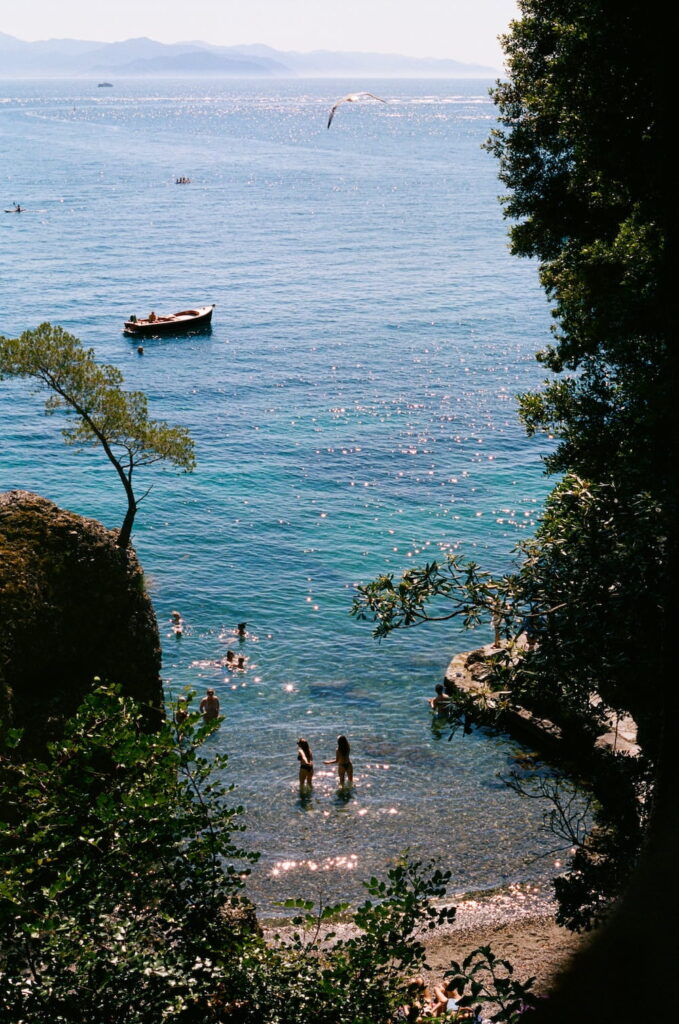
If the Belmond tariff isn’t the assignment, the answer is not a lesser hotel in Portofino – it is the coastline either side. Paraggi, the small emerald bay one cove over, is where the swimming actually happens: Portofino itself has no beach, and Paraggi’s is the best on this stretch, with Bagni Fiore on its rocks. Santa Margherita Ligure, ten minutes further, is the move we’d genuinely recommend – a proper Ligurian town with its own handsome seafront, better-value hotels and restaurants, and a constant thread of boats, buses and a beautiful 40-minute coastal walk into Portofino. Staying there and strolling in for dinner, after the day crowds have gone, is doing Portofino properly on half the budget.
What to actually do
Swim at Paraggi, not from the harbour. Walk – the path up to Castello Brown and on to the lighthouse at Punta del Capo takes half an hour and delivers the postcard view back over the bay, and the longer trail through the national park to San Fruttuoso, the abbey in a cove reachable only on foot or by boat, is the best half-day on the peninsula; swim when you arrive, return by ferry. Get on the water once, ideally on a gozzo rather than anything with a flybridge. Have one long dinner on the piazzetta and one gelato – the paciugo at San Giorgio – standing at the harbour’s edge. And be up before nine at least once. Morning is when Portofino tells you the critics have never really been.
Getting there
Genoa is the nearest airport, around 50 minutes by car. By train, the mainline stops at Santa Margherita Ligure; from there it’s a ten-minute taxi, the ferry, or the coastal walk. Cars are pointless – the village is pedestrianised and parking is scarce and brutal. Come between May and early October; June and September are the sweet spots, when the water is warm and the timetable of crowds is thinner still.

Dubai-based Isabella Craddock is the founder of Near+Far, a founding Academy Chair for The World’s 50 Best Hotels, former Condé Nast Traveller editor and a hotel-obsessed, design-devoted travel planner—for friends, loved ones, and readers alike.



discuss
Email
Pin
Tweet
Share