
Small ship cruises appeal to people who enjoy spending time in the destination, not just passing through it. A smaller vessel can enter narrow waterways, stop in places with only a handful of moorings, and spend time near communities that still revolve around fishing, farming, or seasonal tourism. The atmosphere on board is usually quieter too.
One voyage might involve gliding past waterfalls deep inside a Norwegian fjord. Another could mean spotting penguins on a rocky Antarctic shoreline or watching glaciers calve into the sea in Patagonia. Across Europe and the Southern Hemisphere, small ship cruising opens up places where geography naturally limits larger vessels.
Cruising the Norwegian Fjords: Towering Peaks and Viking History
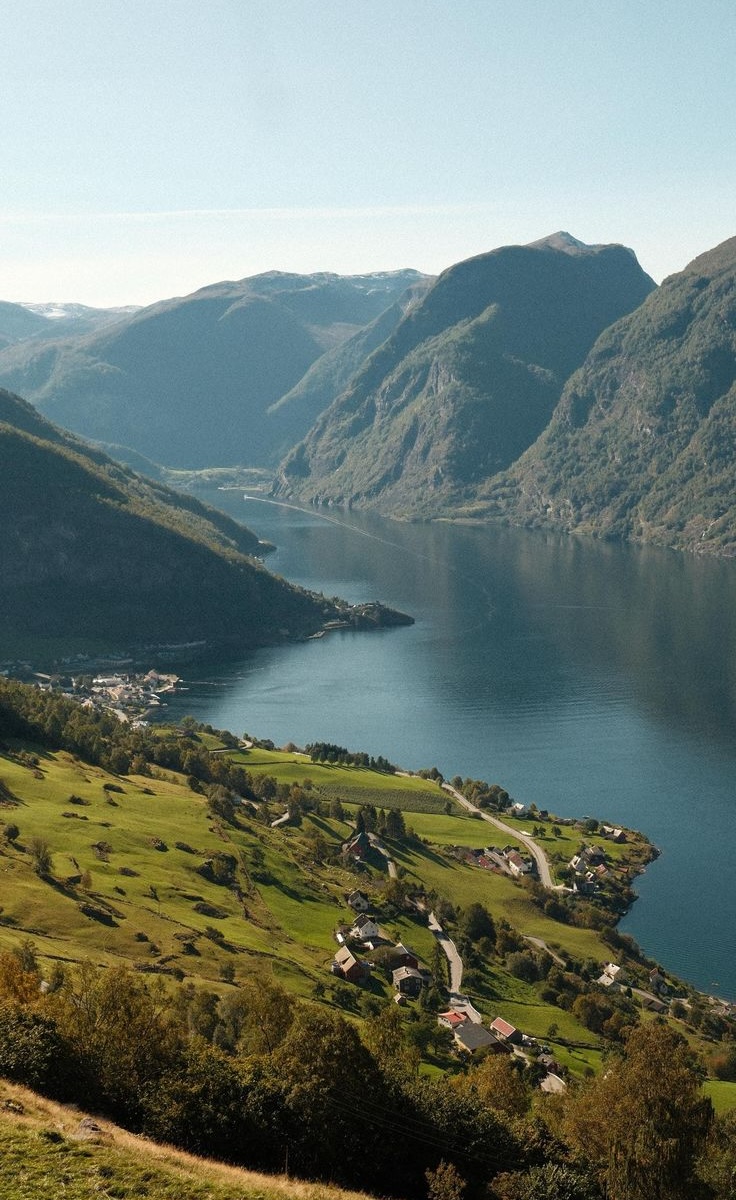
The Norwegian fjords have a way of making distances feel deceptive. Looking across Geirangerfjord or Nærøyfjord, villages seem close enough to walk to, yet tall cliffs and deep water separate everything. Small ships work particularly well here because they can venture further into the narrow reaches of the fjords, where waterfalls tumble straight into the water and old farms cling to mountainsides.
Passengers boarding in Bergen often spend time around Bryggen before departure. Early mornings are especially pleasant when the crowds are thin, and the wooden merchant buildings along the harbour are still quiet. The nearby Fish Market remains a useful place to wander before sailing, especially during summer.
For those looking at handpicked small ship cruises in the Norwegian Fjords, the real advantage is access to places that rarely accommodate larger vessels. Small ships frequently call at villages such as Flåm, where trains climb into the mountains, and Undredal, a settlement with only a few hundred residents tucked beneath towering slopes. Sailing through Geirangerfjord also brings close views of waterfalls including Seven Sisters and Bridal Veil, often with very little separating the ship from the cliff face.
Viking history remains woven into the coastline. Stavanger’s waterfront museums display artefacts recovered from burial sites, while reconstructed longhouses provide a useful glimpse into everyday life centuries ago.
Sailing the Scottish Hebrides: Wild Coasts and Ancient History
The Hebrides are spread across Scotland’s Atlantic edge, where ferries, fishing boats and small cruise vessels share harbours that often feel unchanged by modern tourism. Conditions can vary dramatically from one island to the next. Bright sunshine on Mull may be followed by mist and drizzle a few miles away.
Lewis attracts visitors interested in archaeology, particularly the Calanais Standing Stones, which sit above Loch Roag. In Stornoway, Cromwell Street remains the town’s main thoroughfare, lined with independent shops and overlooking a harbour that stays active throughout the year. Fishing vessels still come and go daily.
Further south, Harris features rugged hills with long stretches of pale sand. Small ships often anchor in quiet bays before continuing towards islands such as Mull, Iona and Staffa. The latter is famous for Fingal’s Cave, where basalt columns rise from the sea in unusual formations.
History appears frequently throughout the journey. Duart Castle overlooks the Sound of Mull from a rocky headland, while Iona Abbey continues to draw visitors interested in Scotland’s early Christian heritage. Wildlife is equally common. Seals are often spotted hauled out on skerries, and sea eagles occasionally appear overhead. Wind conditions change quickly around these islands, which is worth remembering when stepping ashore.
Patagonia by Sea: Glaciers, Fjords and the End of the World
Patagonia feels vast from any angle, but seeing it from the water adds a different layer. Mountains rise directly from the shoreline, glaciers spill into narrow channels, and there are long stretches where no settlements are visible at all.
The appeal of spectacular Patagonia cruises becomes clear while navigating places such as Glacier Alley near Tierra del Fuego. Several glaciers descend from the Darwin Range, and each has its own character. Some appear bright blue, while others are streaked with grey sediment carried down from the mountains. Small expedition vessels can manoeuvre deep into these channels, providing close views that are difficult to appreciate from a distance. Excursions often include walks through Magellanic forests, where twisted lenga trees grow among thick mosses and damp undergrowth.
Most cruises begin or end in Ushuaia. Before boarding, travellers often spend a few hours exploring Avenida San Martín, browsing outdoor gear shops or walking along the waterfront near the Beagle Channel. The former prison museum remains one of the town’s most interesting attractions and provides useful background on life in one of the world’s southernmost settlements.
Weather conditions change rapidly here. A bright morning can become cold and windy by lunchtime, particularly when approaching exposed sections of coastline.
Expedition Cruising in Antarctica: The Ultimate Remote Adventure
Antarctica is one of the few destinations where the journey there still feels like part of the adventure. Most expeditions depart from Ushuaia before crossing the Drake Passage, a stretch of ocean that can be remarkably calm or surprisingly rough.
Once south of the South Shetland Islands, the scenery becomes increasingly dramatic. Icebergs drift through sheltered bays, glaciers descend into the sea, and snow-covered mountains dominate the horizon. Small ships are essential because strict environmental regulations control the number of people allowed ashore at any one time.
Landings typically take place by Zodiac. At Cuverville Island, gentoo penguins often gather near the shoreline, while Neko Harbour provides one of the few opportunities to stand on the Antarctic mainland itself. Guides keep a close eye on wildlife activity and changing ice conditions throughout the day.
Away from shore, there is usually plenty happening on deck. Humpback whales frequently appear around feeding areas, and leopard seals are occasionally spotted resting on floating ice. Many passengers spend far more time outside than they initially expect, despite the cold temperatures.
Croatia and the Dalmatian Coast: Mediterranean Small Ship Magic
Croatia’s coastline seems designed for small ship cruising. Hundreds of islands, sheltered coves and historic ports are scattered along the Adriatic, creating countless opportunities for vessels to stop throughout the journey.
Split is often one of the first ports on the itinerary. Diocletian’s Palace forms the heart of the old town, though it feels less like a monument and more like a functioning neighbourhood. Residents still live within the ancient walls, and the stone lanes around Pjaca Square and Marmontova Street remain busy throughout the day. Fresh produce stalls at Green Market, just outside the palace area, attract locals shopping for fruit, vegetables and seafood.
Further south, Dubrovnik continues to draw attention for its fortified old town. Walking the city walls early in the morning usually avoids the busiest crowds. Islands such as Korčula, Vis and Mljet each have their own character. Korčula’s narrow streets follow a medieval layout designed to provide shelter from prevailing winds, while Mljet National Park contains saltwater lakes connected to the sea by narrow channels.
Where will your next small ship cruise take you?
Small ship cruising works particularly well in destinations where geography shapes daily life. Norwegian fjords, Scottish islands, Patagonian channels, Antarctic landing sites and Croatian harbours all fall into that category. These places aren’t defined by large cruise terminals or crowded waterfront developments. They are places where the landscape still dictates where ships can go and where people settle. That access changes the overall experience.












discuss
Email
Pin
Tweet
Share