
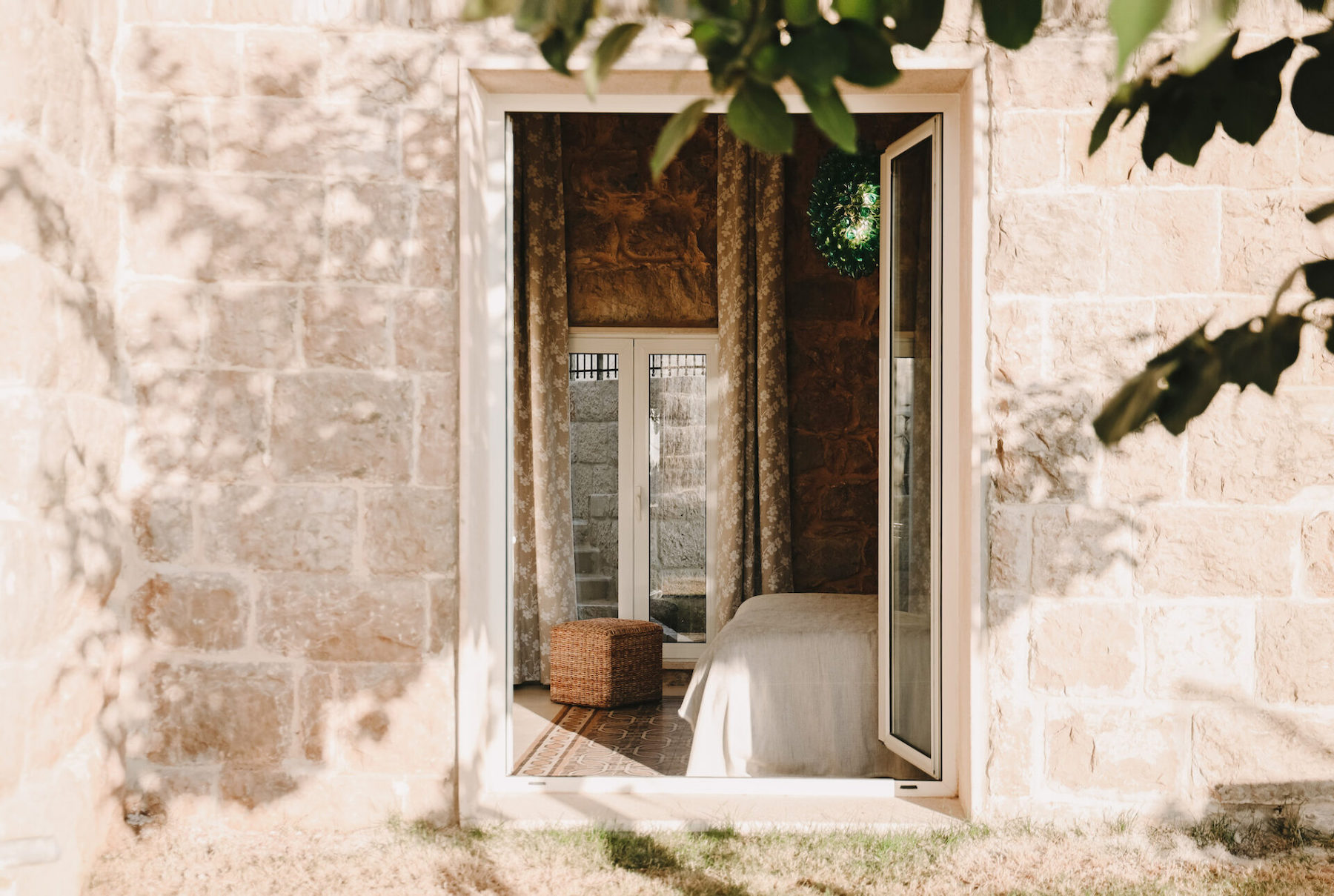
In Lebanon, hospitality isn’t a concept – it’s a way of life. While the country is often associated with high-energy city breaks in Beirut or languid summer escapes in Batroun and Byblos, there’s a quieter side to Lebanese travel. One rooted in community, tradition and the land itself. And nowhere is that more visible than in the country’s growing network of charming, character-filled guest houses known as Beit stays.
The word beit simply means ‘house’ in Arabic – and that’s exactly what these places are. Once-family homes, often centuries old, they’ve been lovingly restored as boutique guest houses offering warm, personalised hospitality with a strong emphasis on heritage, sustainability and design. Many are run by locals or families who have returned to the villages of their parents and grandparents, bringing with them both deep-rooted knowledge and a refined, international perspective.
For travellers from the GCC – whether Dubai, Doha or Riyadh – these homes offer a welcome change of pace: chic, restful escapes that are luxurious without being ostentatious, and immersive without requiring an itinerary. Whether it’s a weekend reset or a week-long immersion in rural calm, Lebanon’s guest houses invite you to reconnect – with nature, food, community, and yourself. Near+Far rounds up the guest houses worth planning your next Lebanese escape around.


Beit Douma – Batroun District
Sitting 1,000 meters above the coast in the preserved village of Batroun is Beit Douma, one of the most beautiful hotels in Lebanon and a grounding and restorative retreat from Beirut. Located atop a mountain surrounded by olive groves, the traditional Lebanese home-turned-design-led boutique hotel dates back to the 18th century and has an original Summaqi stone floor in the library – filled with cookbooks and other reads. There’s an unrivalled sense of peace and being at home, from the hot coals that hear the room in the cooler months to the open and bright kitchen where homemade breakfasts (complete with fresh bread baked in the Tabouneh) and dinners are served, and guests convene at the tea and coffee counter. There are just five beautifully decorated, yet simple, rooms, the largest being on the ground floor, complete with a terrace. All rooms have organic bathroom amenities and rustic cotton bedding. Gardens are abundant in laurel and jasmine, and views of Tripoli and the Mediterranean are mesmerising. This is a hotel that’s worth making the road trip for.
@soukeltayeb

Beit Trad – Kfour
There’s a quiet sophistication to Beit Trad, a family-run guesthouse tucked into the hills above Kfour. More private villa than hotel, it features eight rooms, each individually decorated with collected antiques, linen upholstery, and woven rugs. Guests share communal spaces – a stone-walled salon, the leafy garden, the breezy terrace – creating the warmth of a private home. Meals are a highlight, with slow-cooked Lebanese dishes served al fresco, and breakfast taken beneath citrus trees. Wellness is central to the experience: yoga, massage, and even reiki are available. Beit Trad is discreet, elegant and ideal for those seeking stillness with a side of mountain air.


Beyt El Jabal – Deir El Qamar
Set above the hillside village of Deir El Qamar, Beyt El Jabal is a thoughtfully restored guest house in one of Mount Lebanon’s most culturally rich regions. The 19th-century stone building has been brought back to life with care and restraint – traditional arched windows, lime-washed walls, locally sourced tiles and antique wooden doors all remain, while contemporary touches add comfort without distraction. Rooms are calm and airy, some with private terraces and views over pine forests and red-roofed towns below. A communal dining space serves homemade breakfasts and seasonal Lebanese dishes, often made with produce from the surrounding Chouf area. It’s a stay rooted in place – slow, genuine and quietly stylish.
@beyteljabal_lb
Beit El Baydar – Ghalboun
Tucked away in the lesser-known village of Ghalboun, this understated stone guesthouse offers a gateway to authentic rural life in Mount Lebanon. With terracotta roofs and shutters painted in heritage tones, it evokes old Levantine charm. Inside, rooms are airy, pared-back and peaceful – all drawing your eye to the real showstopper: panoramic views across terraced hillsides. Mornings begin with homemade manoushe and labneh in the garden, and days are spent reading under fig trees or hiking through nearby pine forests. The atmosphere is peaceful and meditative – the kind of place where conversations linger and digital detoxes happen naturally.
@byoutghalboun

SaQi Guesthouse – Byblos & Keserwan
Set among the hills between Byblos and Keserwan, SaQi Guesthouse is an expansive and family-friendly retreat that doubles as a working farm. The rooms are scattered across low stone buildings shaded by olive and citrus trees, and the gardens are full of native plants, wooden play areas and lounging spots for kids and adults alike. It’s the kind of place where long breakfasts stretch into lazy afternoons, and pets are as welcome as people. There’s a real emphasis on sustainability, and the team here are passionate about showing guests Lebanon’s agricultural richness – through food, foraging walks and storytelling.
@saqiguesthouse

Beit Teta Mona – Kfar Aaqab
Named after the founder’s beloved grandmother, Beit Teta Mona is a joyful, sun-soaked property surrounded by olive trees and tucked into the hills of Kfar Aaqab. It’s a cross between a family farm, a creative retreat, and a B&B, with sea and mountain views from every angle. Rooms are bright and simple, decorated with handwoven textiles and recycled wood. A small swimming pool sits at the centre of the garden, and guests often gather around the outdoor grill or firepit for long evenings under the stars. It’s rustic in all the right ways – warm, welcoming, and refreshingly unpretentious.
@beit.teta.mona

Guita Bed & Bloom – Aaqoura
Overlooking the terraced hills of Aaqoura, Guita is a family-run guesthouse and agro-tourism initiative rolled into one. It’s particularly popular with Beirut creatives and families seeking a weekend of clean air and slow living. The house is set on a working farm, and guests are invited to explore the surrounding landscape, harvest vegetables, or simply unwind on the deck with views of the Qartaba mountains. Interiors are charming but unfussy, and a rotation of local chefs often come in to prepare meals using garden produce. It’s deeply restorative – and one of the most soulful weekend escapes in Lebanon.
@guitabedandbloom
Beit El Barbara – Deir El Qamar
This 19th-century village house in the historic Chouf district has been transformed into a stylish, laid-back retreat. Every detail nods to Lebanon’s cultural heritage – from tiled flooring and antique mirrors to the fig and olive trees that line the pool. There’s an emphasis on leisure: lazy brunches on the terrace, wine at sunset, board games by the fireplace. With just a handful of rooms and a setting that encourages proper switch-off, Beit El Barbara feels like the weekend house of a very tasteful friend. It’s especially magical in spring and autumn, when the mountains come into bloom.
@beitelqamar

Beit Ammiq – Bekaa Valley
For a true escape into the rhythms of rural life, Beit Ammiq offers a peaceful stay in Lebanon’s fertile Bekaa Valley. Overlooking wetlands and farmland, the stone guesthouse is surrounded by almond and cherry trees, and the slow pace of village life is part of its charm. Rooms are cool and calm, designed with local stone and wood, and the open kitchen spills out onto a sun-drenched terrace. Hike the nearby biosphere reserve, explore Ammiq’s wine scene, or simply spend the day reading in the garden. Beit Ammiq feels wonderfully far from everything – in the best way.
@hotelibanais

Dubai-based Isabella Craddock is the founder of Near+Far, a founding Academy Chair for The World’s 50 Best Hotels, former Condé Nast Traveller editor and a hotel-obsessed, design-devoted travel planner—for friends, loved ones, and readers alike.



discuss
Email
Pin
Tweet
Share