
Near+Far rating: 9/10
In a former 14th-century Dominican convent carved into the cliffs above the Ionian Sea, Four Seasons has taken one of the world’s most storied hotels and made it extraordinary again. Our verdict: one for the ages.
Why book Four Seasons San Domenico Palace
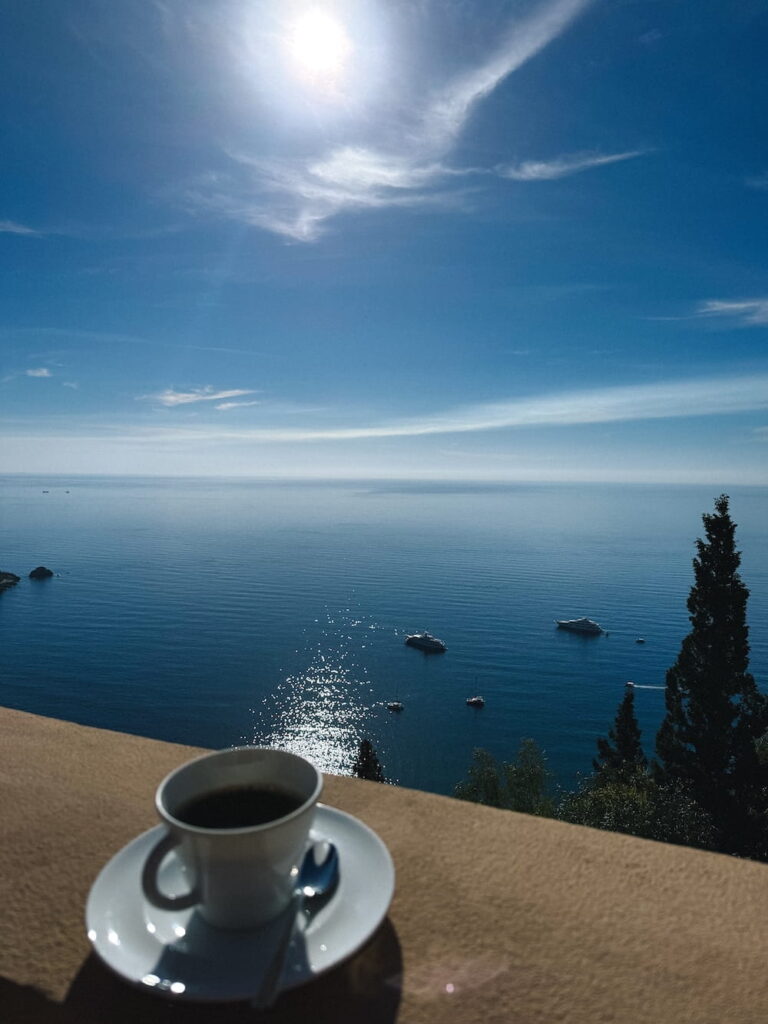
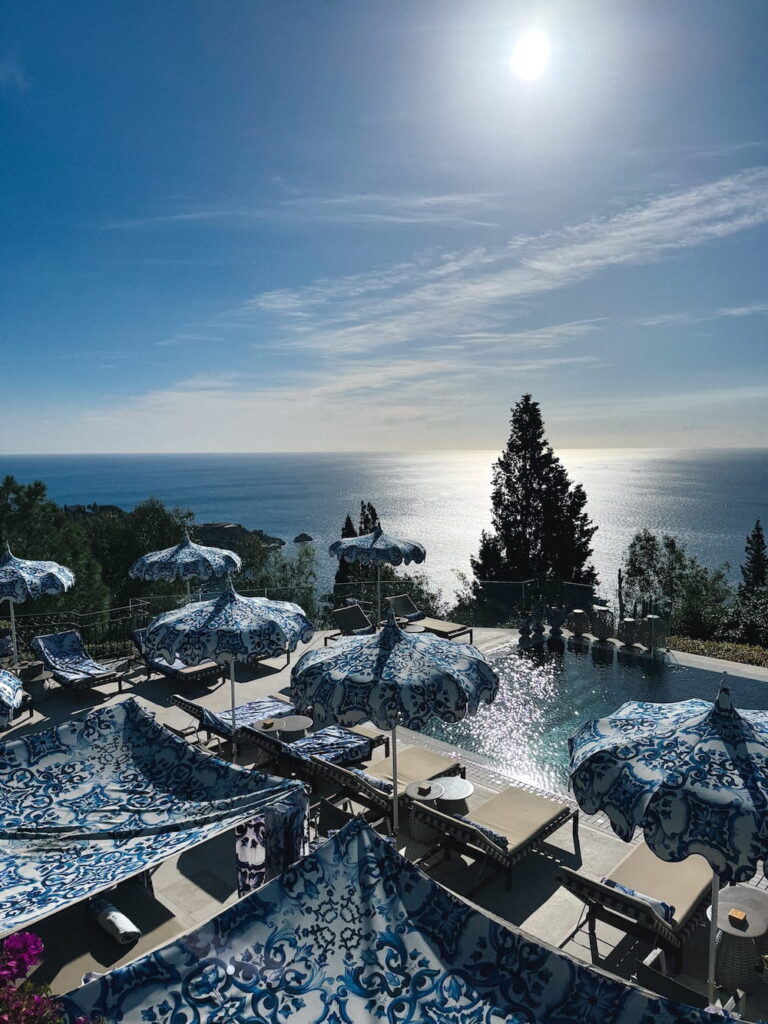
It is late October, almost November. By any reasonable European calculation, summer is over. And yet here we are, sitting under cerulean umbrellas beside one of the most recognisable swimming pools in the world, in 28-degree heat, watching the sun do extraordinary things to the sea below. Light scatters across the Ionian in long, silver shards, all the way to where the coastline curves south towards Catania and Mount Etna smokes quietly on the horizon. A waiter appears. We order something cold. Neither of us says anything for a while.
This is Sicily’s secret weapon. The island’s season runs from April to November, genuinely, reliably, warmly, making it one of Europe’s most compelling escapes for those of us based in the Middle East who want the continent without the grey-skies lottery. And nowhere makes that case more powerfully than Taormina, the clifftop jewel of the island’s eastern coast, and the hotel that has commanded its heights for over six centuries.
In a career of travelling and staying in extraordinary places, a small handful of hotels have genuinely stopped me in my tracks. Three of them, fittingly, have the word palace in their name. San Domenico Palace is one of them.
The story: 10/10
The history here is almost absurdly good. In 1374, Dominican friars established a convent on this clifftop site, built around the residence of one Damiano Rosso, a Catanian nobleman who donated his home to the order and eventually took the habit himself. For nearly five centuries, the community lived and prayed within these walls, never exceeding 40 members, in cells that today you sleep in. When Italy’s new secular state moved to suppress religious orders in 1866, a single friar remained, one Vincenzo Bottari Cacciola, who refused to hand over the keys. Government officials had to use force.
The property was transformed into a hotel in 1896 by the descendants of Rosso’s family, including the nobleman Prince Cerami, for whom the Michelin-starred restaurant is now named, who added a sweeping Grand Hotel wing in the Italian Liberty style. What followed was a century of extraordinary guests: Oscar Wilde, D.H. Lawrence, Greta Garbo, Audrey Hepburn, Sophia Loren, Maria Callas, Marlene Dietrich. In 2017, world leaders gathered here for the G7 summit. In 2021, after an extensive renovation led by architect Valentina Pisani, it reopened as a Four Seasons.
And then, of course, came The White Lotus.
The White Lotus question
You already know about it, or you wouldn’t be reading this. HBO’s second season turned San Domenico Palace into a global obsession. The pool became a screensaver, the cloisters a mood board, the whole magnificent property a collective dream destination. Bookings surged. Taormina was suddenly everywhere.
Here’s the balanced truth: the hotel is better in real life, and also slightly different. Breakfast, for instance, one of the most memorable meals we had in a year of hotel stays, happens not around the famous pool as the show suggests, but on the compact terrace of Anciovi, the hotel’s seafood restaurant, which practically tumbles off the cliff edge into the sea below. The show compressed and reimagined. The reality, if anything, is more cinematic.
By October, the White Lotus effect had softened considerably. The hotel was calm, unhurried, largely full of guests who were there because they genuinely wanted to be. The hotel has been quietly deliberate about this: the bar and restaurant are open to external visitors, but only with prior booking, and the property itself is otherwise guest-only. It keeps the energy exactly right.
The location: 10/10
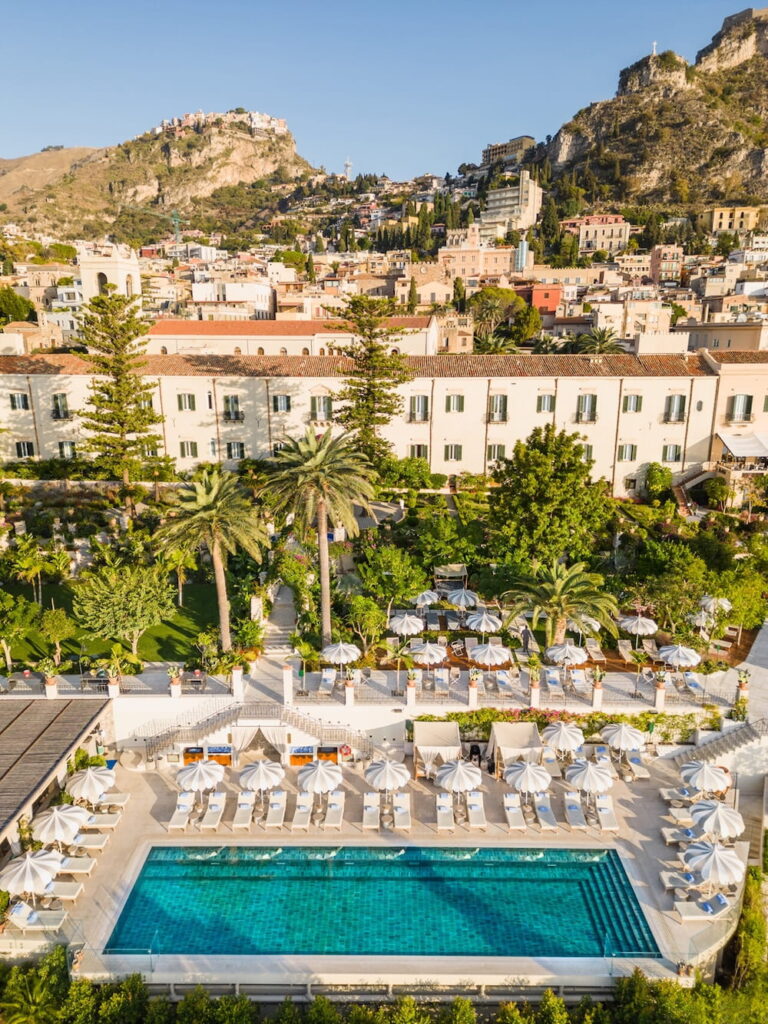
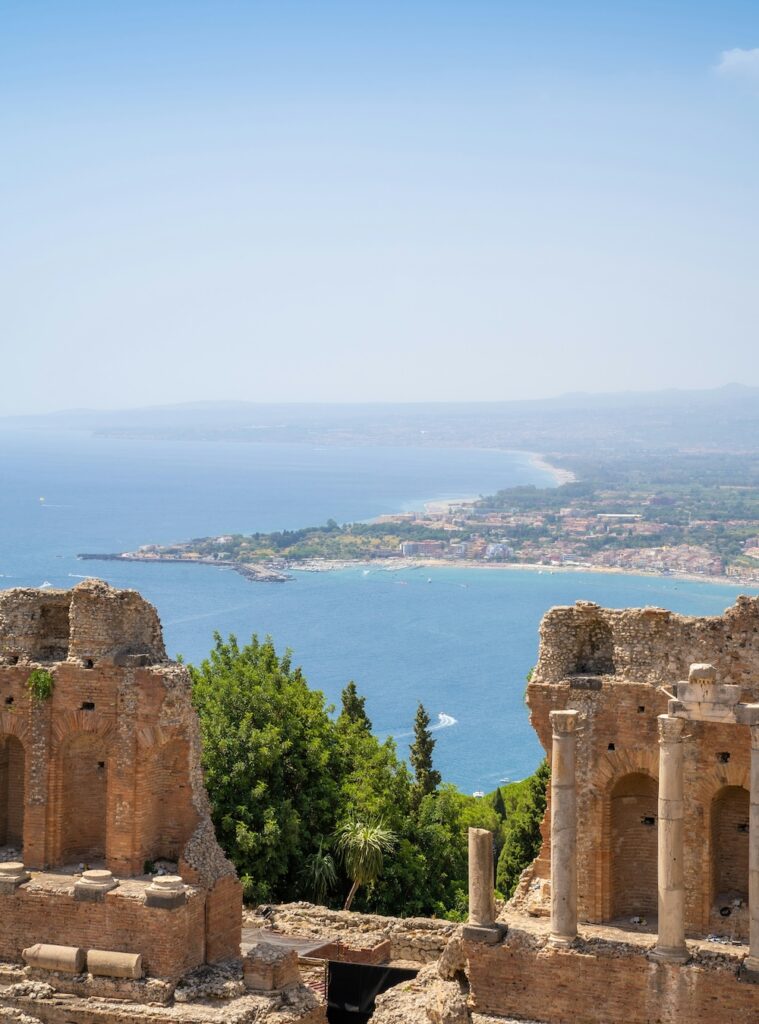
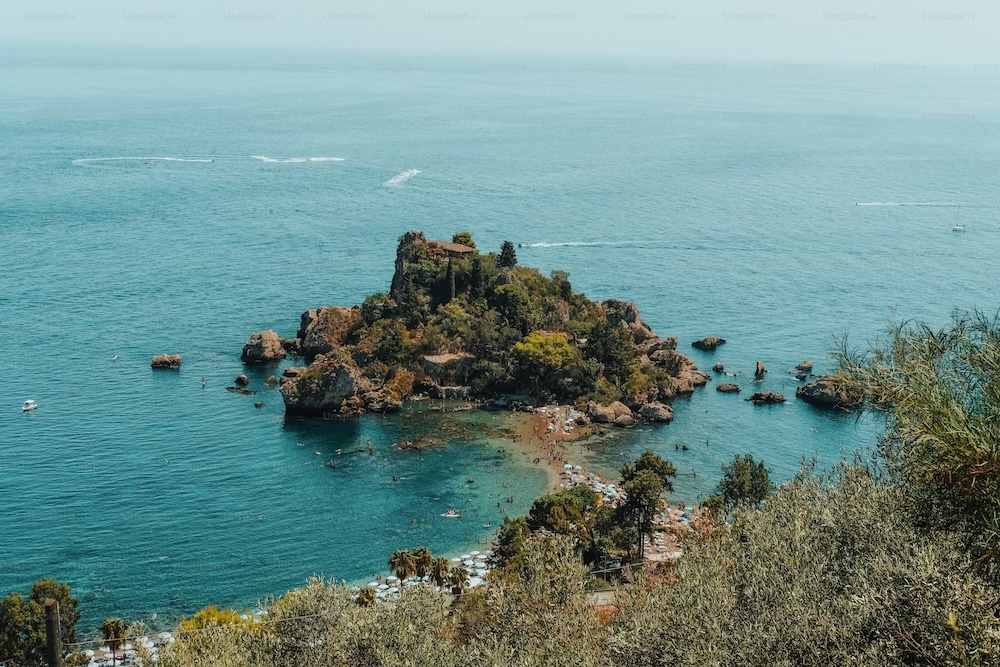
Taormina sits on a ridge above the Ionian Sea at around 200 metres, which means that almost everywhere you look, the view is theatrical. The hotel sits within the town’s medieval heart. Step out through the guarded stone entrance and you’re immediately on Taormina’s main corso, thronged with life even in late October: glitzy boutiques, ancient ruins, restaurants spilling onto terraces, the extraordinary Greek amphitheatre with Mount Etna framed in its backdrop. Two minutes from the cloisters. The contrast between the hush of the property and the buzz of a Sicilian town very much alive is part of what makes this place so pleasurable to inhabit.
The rooms: 9/10
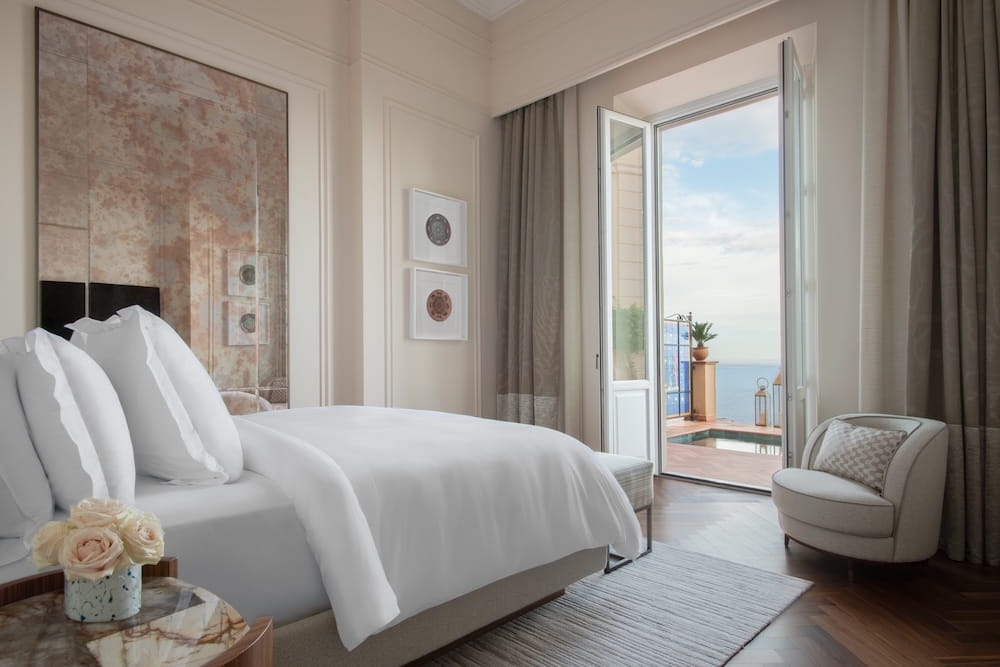
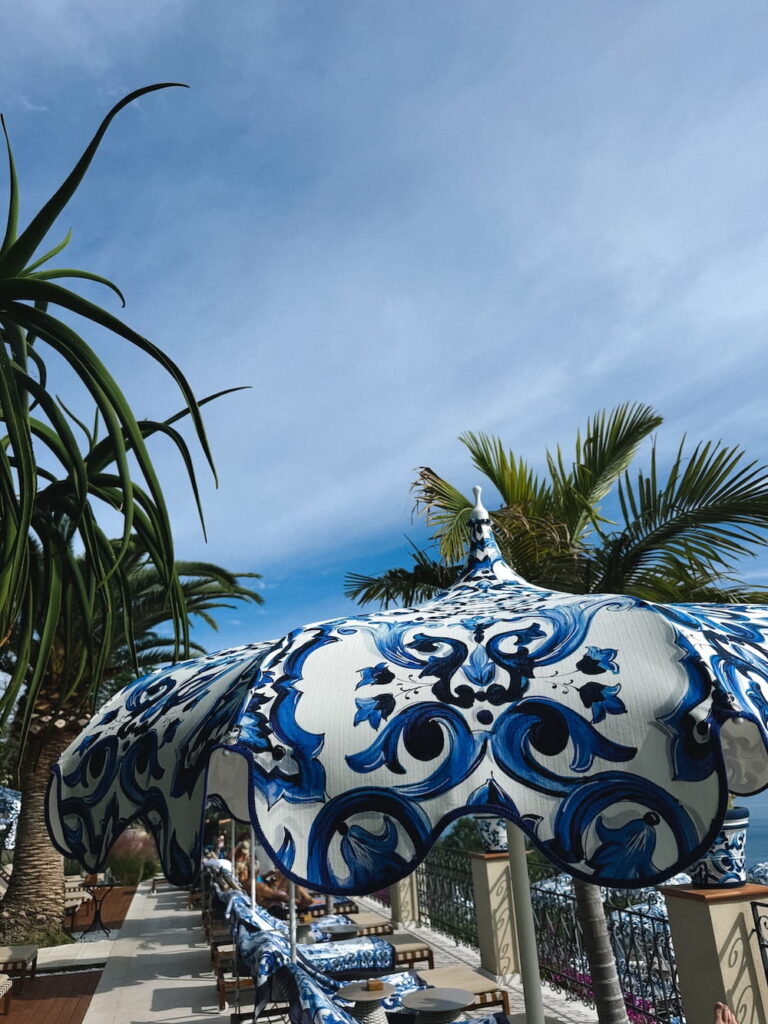
The hotel comprises two distinct wings that tell two different stories. In the Grand Hotel wing, rooms are elegant and contemporary, many with private terraces and sea views. But the rooms worth seeking out are in the Ancient Convent wing, the original monks’ cells, each still bearing the name of its former inhabitant above the arched doorway. You enter by stooping slightly, ducking under the arch, stepping into a space that has held centuries of quiet and prayer. The stone is cool to the touch regardless of the heat outside. Gardens and sea shimmer beyond small windows.
All 111 rooms and suites have been finished in the Four Seasons manner: impeccable beds, beautiful linens, amenities that feel considered rather than generic. The famous pillow menu is present and correct. What the convent rooms add, and what no amount of renovation could manufacture, is a sense of place so specific and so layered that waking up in one feels like a genuine privilege. The larger suites come with private plunge pools and terraces looking straight at the bay.
Food and drink: 10/10
Bar & Chiostro
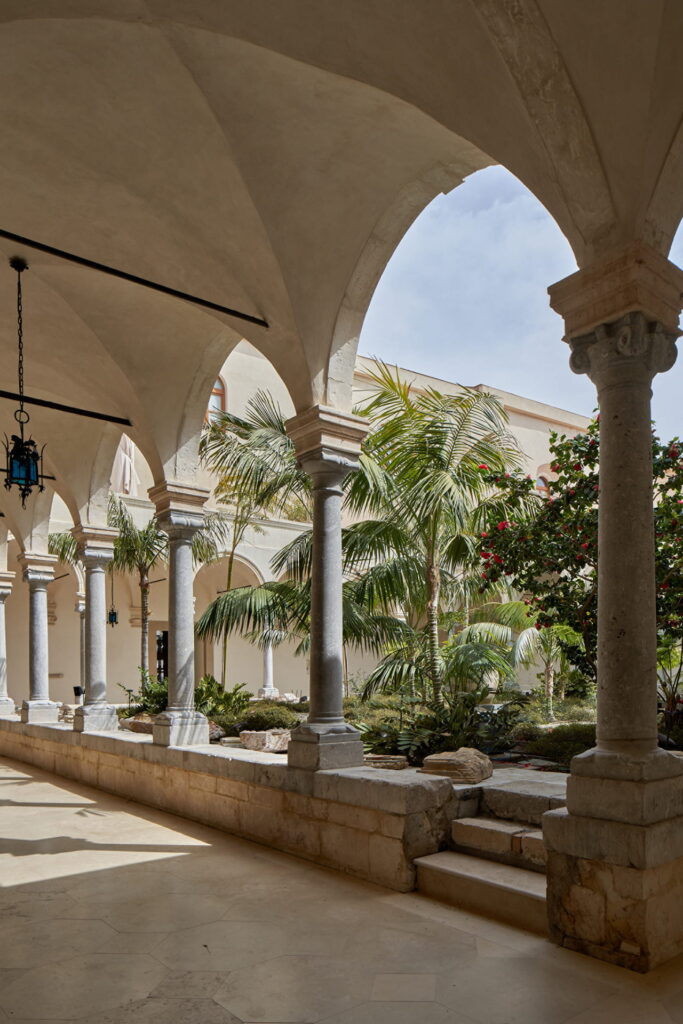
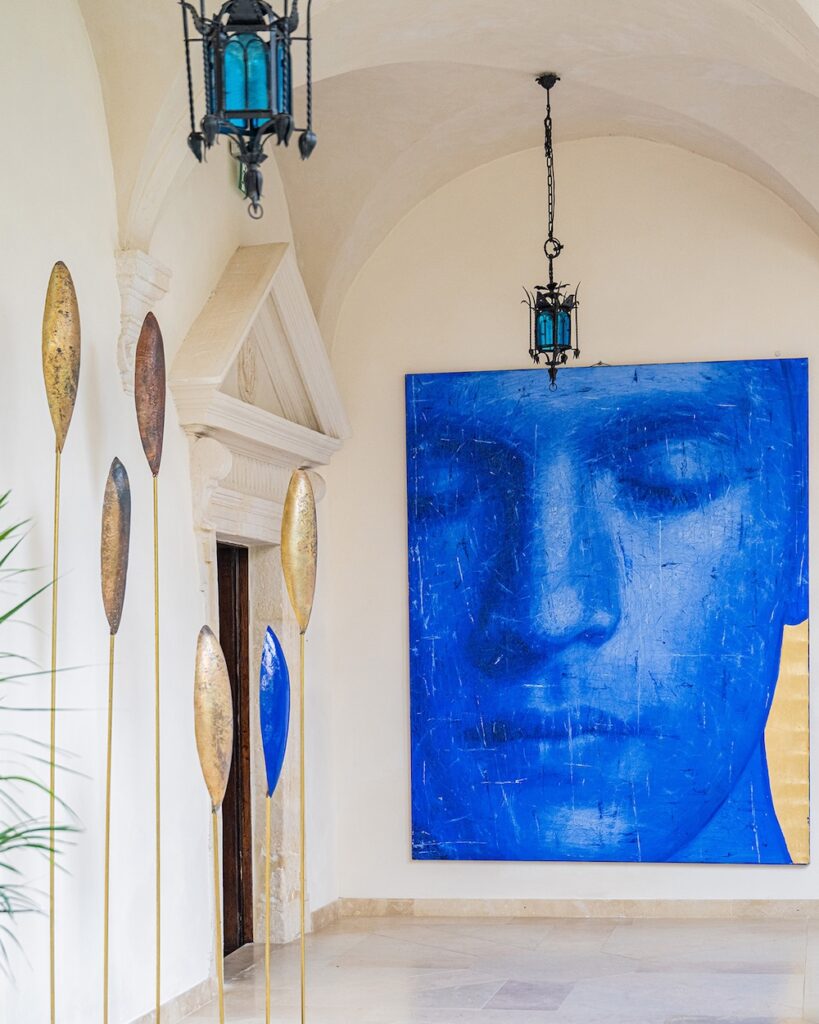
We began each evening the same way: in the Bar & Chiostro, the courtyard bar set beneath the trees in the hotel’s ancient cloisters. This is aperitivo done properly. Italicus spritzes, luminous and citrus-sharp, served alongside a complimentary board of snacks that appeared without fuss and disappeared without ceremony. The air smelled of jasmine and old stone. A pianist played somewhere nearby. It is one of the great ways to begin an evening anywhere in the world.
Anciovi
Breakfast at Anciovi was, and this is not a sentence I deploy carelessly, the finest hotel breakfast we have had in hundreds of luxury hotel stays. We sat on the terrace: the one that essentially hangs over the clifftop, looking straight across the bay. The light on the first morning made us speechless. There is a buffet of impeccable Sicilian classics alongside à la carte, and you should absolutely order from both. Get a terrace spot. It is worth arriving early, or waiting however long it takes.
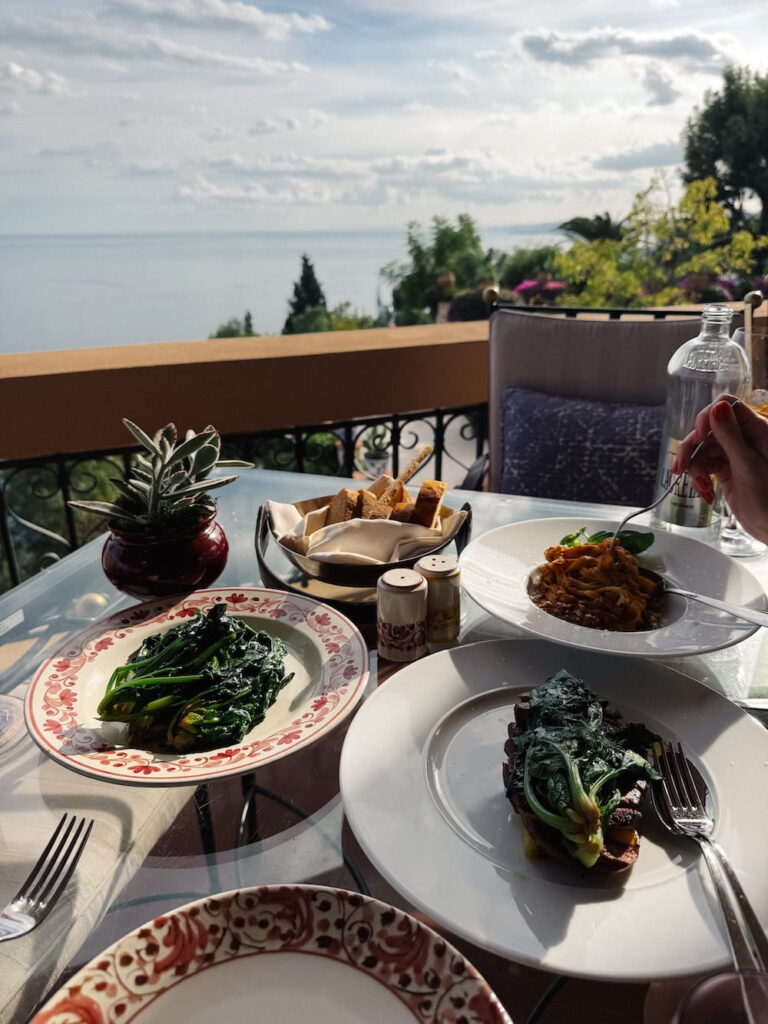
At dinner, Anciovi trades in the kind of Italian cooking that reminds you why it became the world’s most beloved cuisine: a classic ragù with the depth of something that has been thought about seriously; linguine with black squid ink and lemon zest, bracingly good, tasting precisely of where you are.
Principe Cerami
The Michelin-starred dining room, named for the nobleman who first transformed this monastery into a hotel, is a different proposition entirely. Chef Massimo Mantarro’s cooking is Sicilian in its bones but refined in its expression. We started with quail alongside peanuts, red and savoy cabbage, a dish of real intelligence, earthy and elegant in equal measure. The main: artisanal spaghetti alla Piazza “Mount Etna” with tomato, salty ricotta and black breadcrumbs. It sounds almost simple. It tastes like Sicily distilled into a bowl. The sea view from the dining room does nothing to hurt proceedings.
The pool and grounds: 10/10
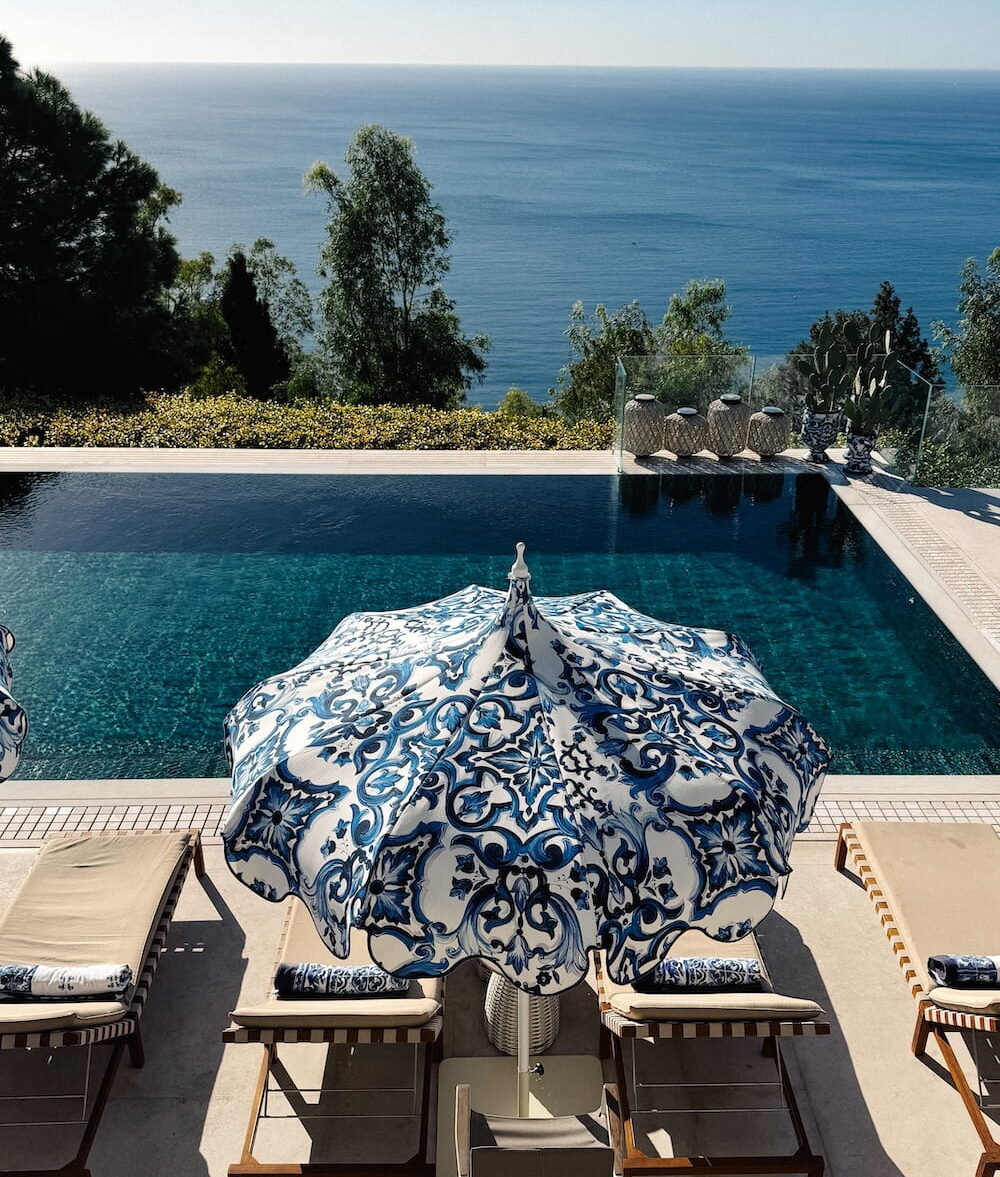
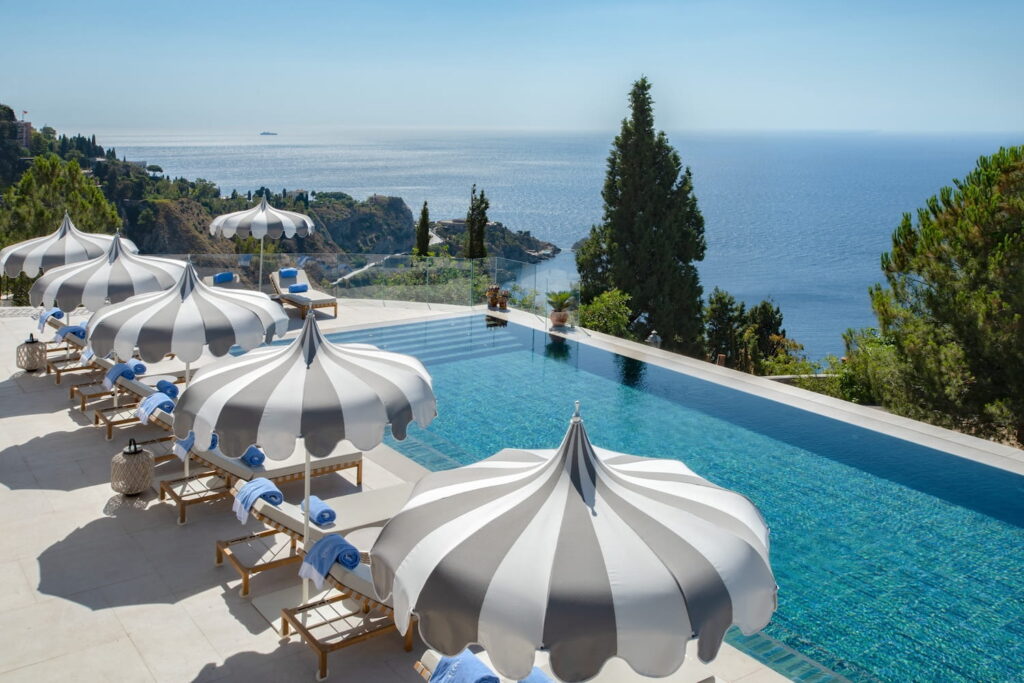
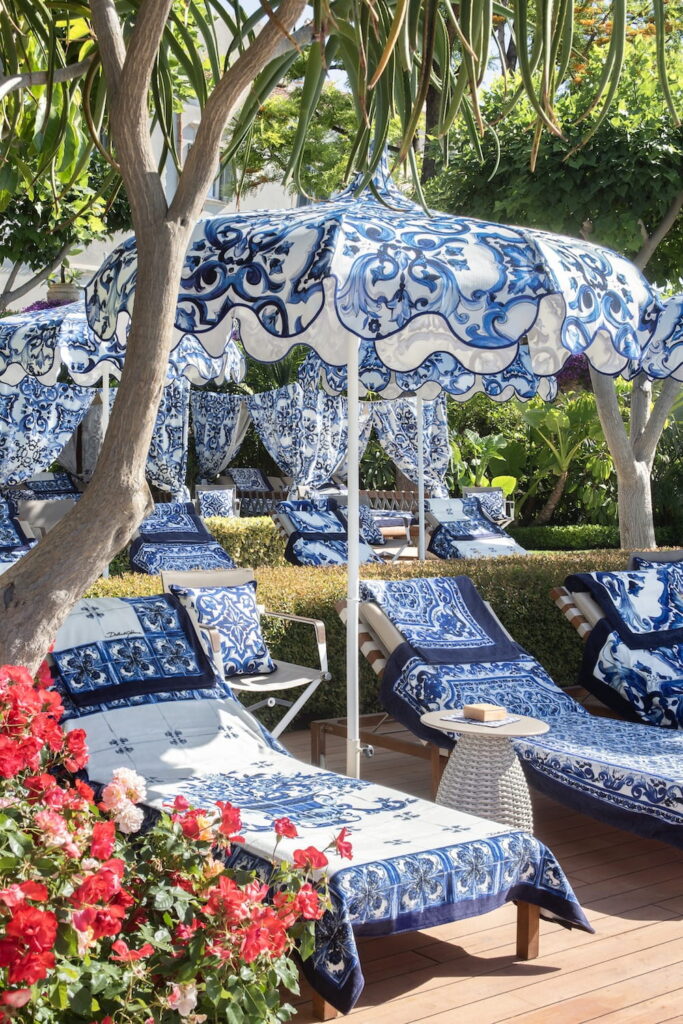
The pool is exactly as it looks on every screen you have seen it on, and remarkably, even better in person. Set into the cliff, the cerulean Dolce & Gabbana umbrellas, the house has long been smitten with Sicily, somehow feel tasteful rather than branded. The shade is perfectly matched to the sea stretching away below. Spend enough time here and you will understand why a television production chose it as their primary backdrop.
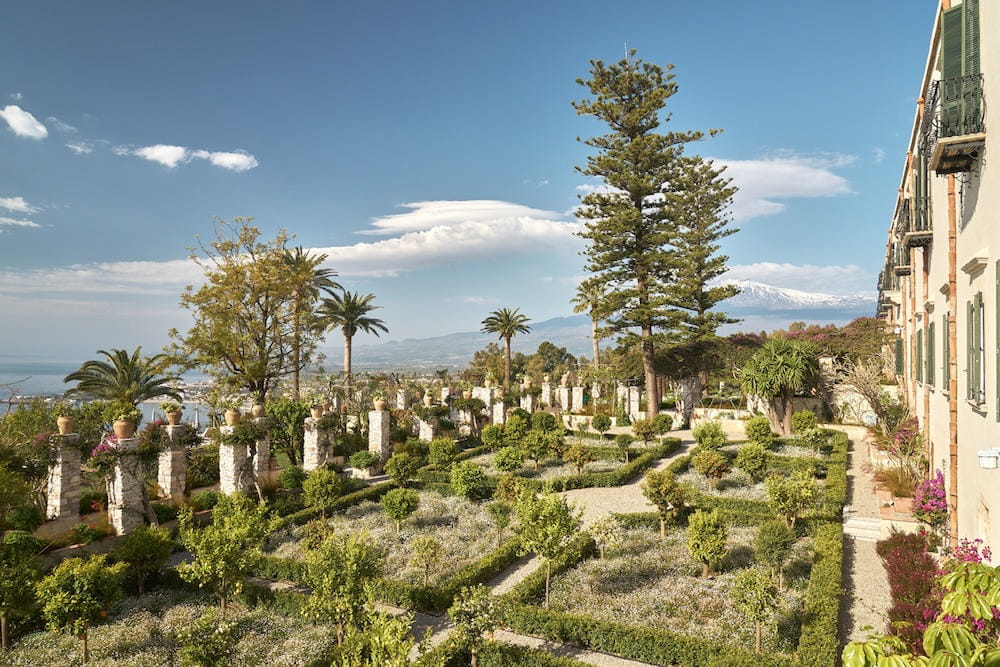
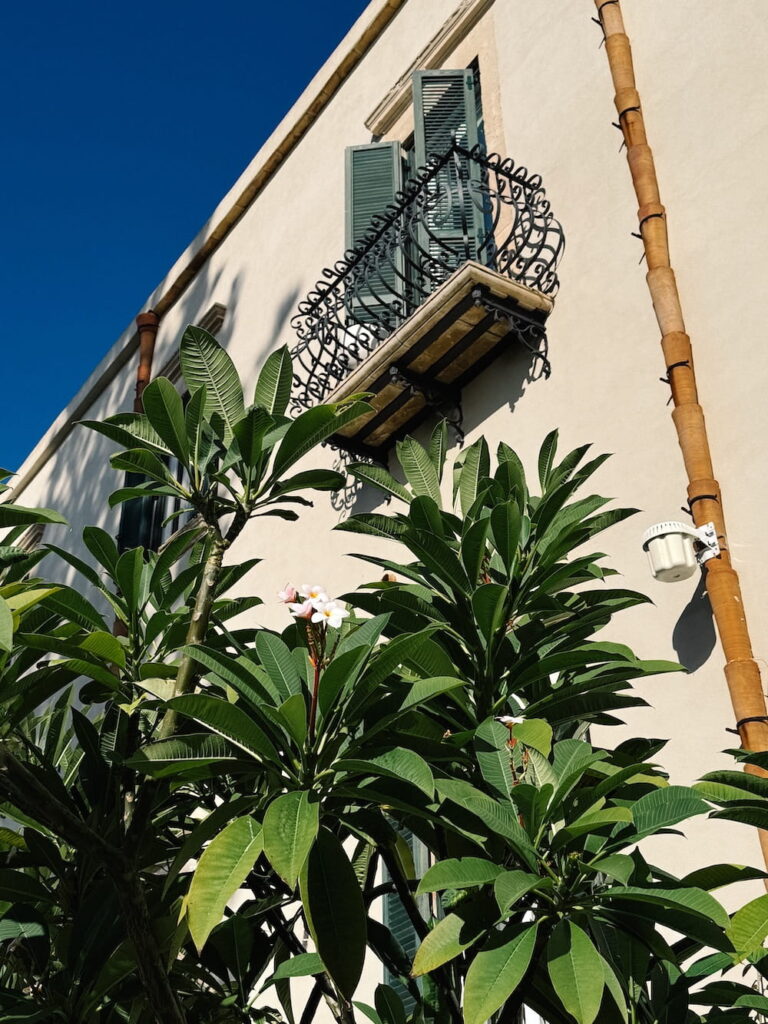
The gardens surrounding the property are fragrant and considered, divided into distinct areas including a citrus garden, an Italian garden and a belvedere, alive with the hum of bees and birdsong. Herbs and flowers press up against ancient stone walls. The scent of rosemary catches in the warm air. It is the kind of garden that slows you down, that makes you realise you have been moving too fast.
The verdict
We stayed three nights and could, genuinely, have stayed three weeks. San Domenico Palace is the rare hotel that justifies its mythology. The history is real, the setting is extraordinary, the Four Seasons execution is flawless where it matters. But what elevates it beyond five-star competence into something truly memorable is the feeling of the place: the cool of the stone, the light on the water at breakfast, the silence of the cloisters at night, the Italicus in the courtyard as the sky turns gold.
The White Lotus brought the world here. But the world would have found it eventually anyway.
Rooms from approximately USD $1,100 per night. fourseasons.com/taormina

Dubai-based Isabella Craddock is the founder of Near+Far, a founding Academy Chair for The World’s 50 Best Hotels, former Condé Nast Traveller editor and a hotel-obsessed, design-devoted travel planner—for friends, loved ones, and readers alike.



discuss
Email
Pin
Tweet
Share