
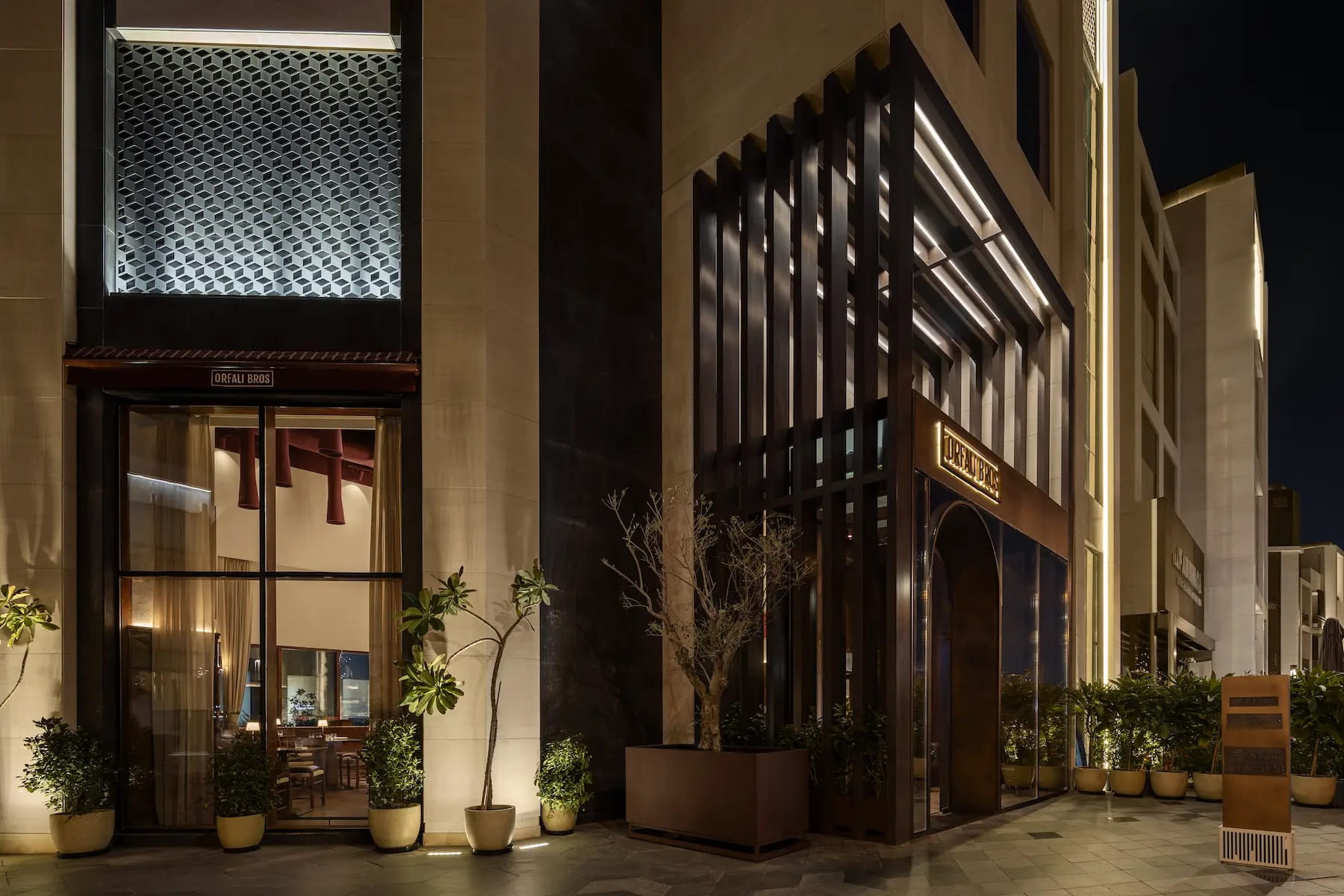
We should say it again at the start: we have never been to Aleppo. By the end of dinner at Orfali Bros we had more or less booked the flight in our heads. We’d worked out where to eat, which souq to get lost in and what to bring home in our luggage. That is an odd thing for a restaurant in a low-slung neighbourhood complex in Jumeirah 1 to do to you. Wasl 51 is a long way from Dubai’s rooftop temples in spirit, if not in taxi fare. Nobody arrives here by accident, and nobody leaves the same.
Some context for anyone who, like us, knows Aleppo mainly from maps and headlines. It is one of the oldest continuously inhabited cities on earth. For centuries it was a trading stop on the Silk Road, and its covered souq was one of the largest in the world until war tore through it in 2012. Across the Levant, the pistachio is simply called fustuq halabi, the Aleppo nut. The chilli flakes that carry the city’s name have turned up in kitchens far beyond Syria. Aleppo is also a place people talk about the way Italians talk about Bologna: a city that cooks seriously and argues about it even more seriously. Mohamad, Wassim and Omar Orfali grew up there. Their Voyage 2.0 tasting menu is their way of taking you back with them.
Announced, then arrived
You aren’t handed a menu when you sit down. There is nothing to read, nothing to choose and nothing to argue about with your dining companion. Instead, each course is announced as it arrives, with a sentence on where it comes from, what’s been fermented and which memory from home inspired it. Then the next one appears, with metronomic precision. Fourteen courses land in around 90 minutes. That makes this the wrong place to catch up with a friend you haven’t seen in years, because you’ll barely get past “so, how’s work?” before the next plate arrives. We didn’t mind at all. You come here for the food, and the food keeps coming.
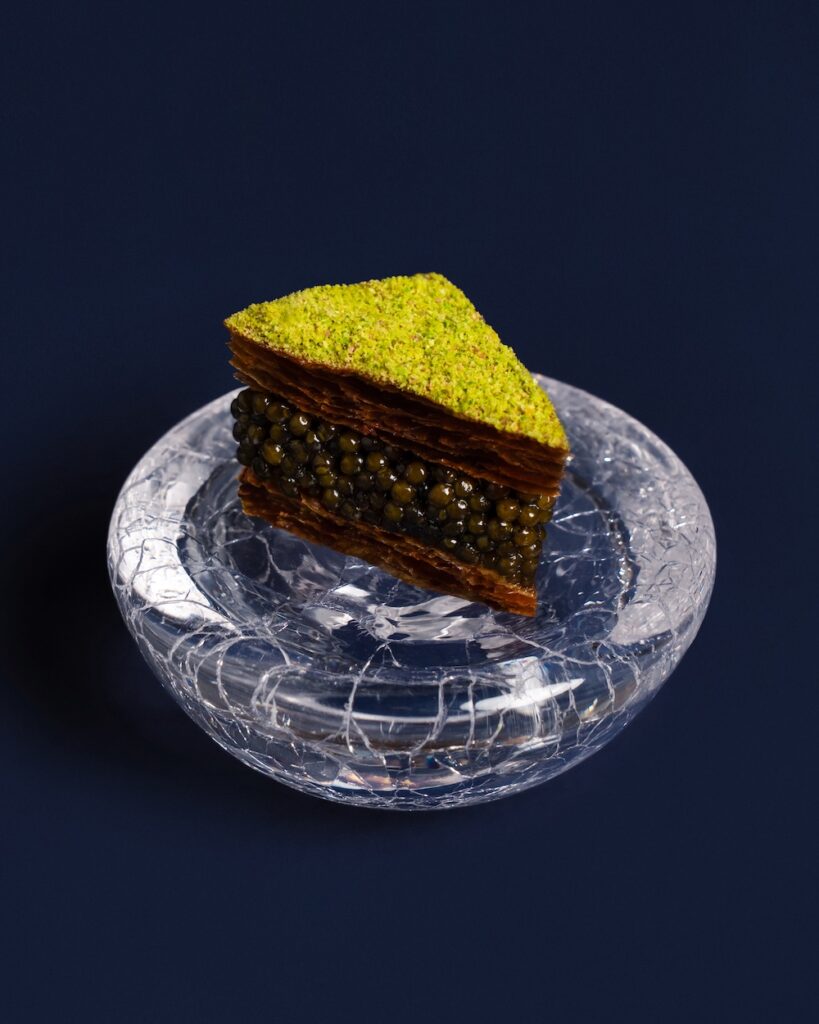
It starts, gloriously, with a pun you can eat. The baklava here is a crisp little pastry vessel holding caviar, crème fraîche and Aleppo pistachio. It’s the grandmother’s pastry tin crossed with the oligarch’s caviar tin, and there is nothing ironic about it. It is served as a single mouthful, which is ambitious for something this generous, but we managed. And it is surprisingly light for its size. The salt of the caviar meets the sweet, nutty richness of the pistachio, and your brain briefly files a complaint before giving up and enjoying itself.
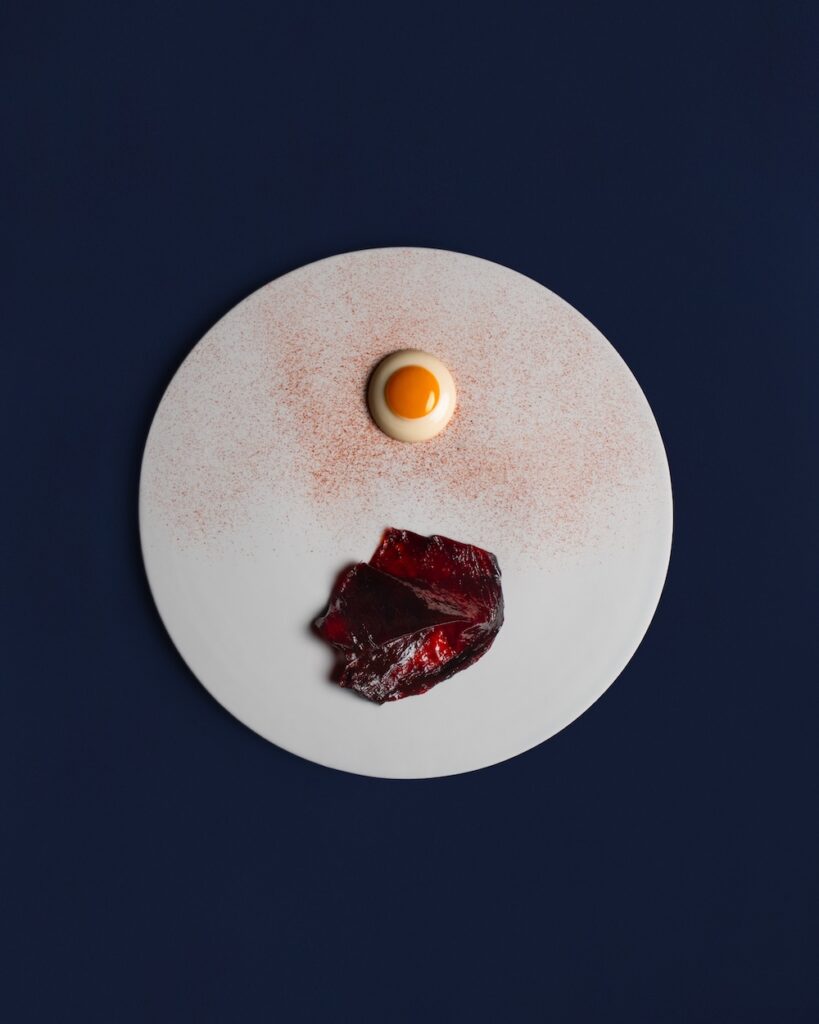
Foie gras royale follows with duck caramel, hazelnut and truffle. Then comes egg basturma with koji aioli and çemen, the fenugreek paste that coats basturma across the Levant and Anatolia. It’s a breakfast-counter memory served to people who have booked weeks ahead.
Then comes the corn bomb, the dish regulars would riot over if it ever left. It isn’t on the card, but it arrives anyway. It serves corn several ways at once and grounds it with 36-month Parmigiano Reggiano and a tamari brewed from corn in the house fermentation lab. It is one of Orfali Bros’ signature dishes and has been from the start. After one bite you understand why nobody has dared take it off.
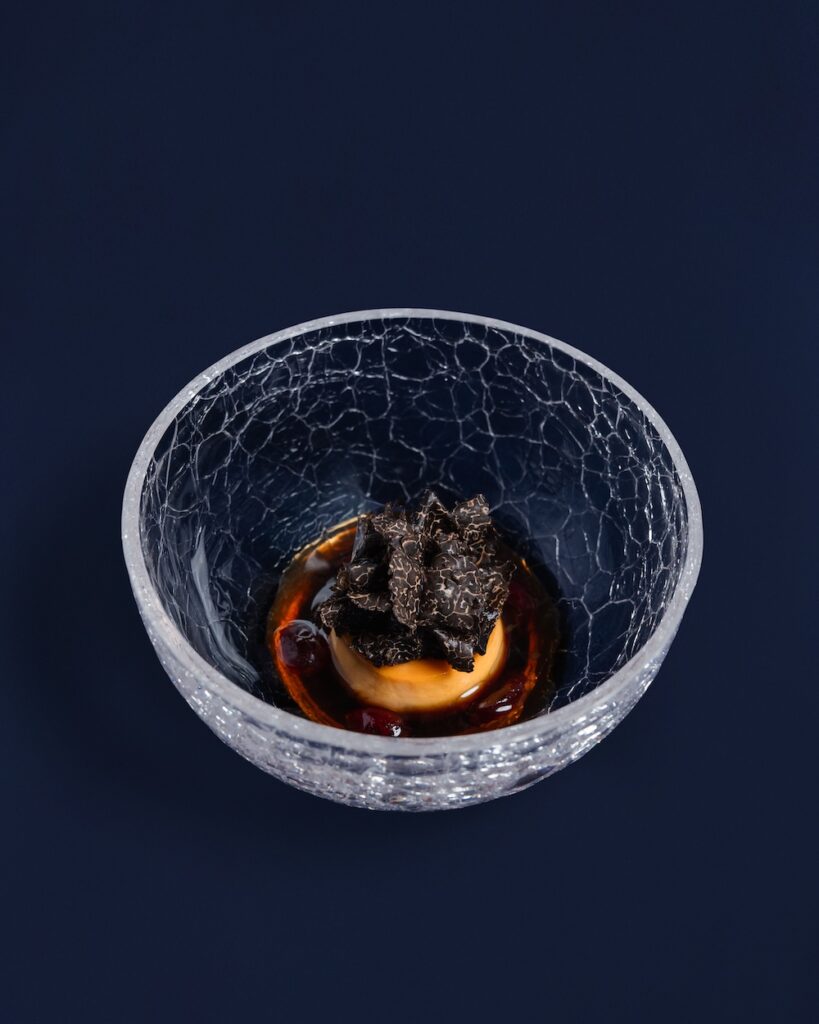
Then the crème caramel. Savoury crème caramel is having a moment in serious kitchens right now, but few do it this well. There’s an umami custard, a caramel made with onion tamari (also brewed in-house – more on that later) and king crab shoulder. The crab is there, but the mushroom sauce leads, so the dish tastes deep and savoury rather than of the sea. It wobbles like a dessert and eats like a main course. We would like another one now, please.
The middle of the menu goes back to Aleppo’s streets and larders. Roots is the house classic long known to regulars as Eat H: a spicy burghul salad with Aleppo chilli paste, tomato, puffed burghul and shiso, and just the right amount of heat and crunch. The Aleppo street bun is filled with sujuk, toum, pickled haskorieh peppers and wagyu coppa. The orfali bayaldi is the prettiest plate of the night, decorated with edible flowers. It’s a smoked-aubergine dish that owes something to the Turkish imam bayildi and a great deal to the Syrian larder. It comes with makdous (baby aubergines stuffed and cured in oil) worked into a muhammara, the red pepper and walnut paste Aleppo has long claimed as its own, plus tarator and verjus. Vegetables here get the attention most kitchens save for meat.
None of this is subtle. The flavours are a punch in the face, in the best sense: chilli, ferment, smoke, acid and fat, all turned up loud. But the room never takes itself too seriously. Everything is inspired by what the brothers ate growing up, and they’re clearly having fun with it. You can taste it.
Then the menu goes travelling. There’s o-toro and chutoro with tuna garum, finger lime, fermented tomato and sea fennel. King crab arrives with caramelised onions, burnt cream and horseradish. A sea scallop comes with the house hot sauce, tamari and more wagyu coppa. The Japanese and European touches never feel borrowed. The brothers are simply a family from Aleppo who have eaten widely, cooked wherever they’ve been, and come home with ideas the way other people come home with fridge magnets.
Last of the savoury courses comes the kibbeh mishwieh, and it was the best thing we ate all night. Kibbeh is Aleppo’s great obsession, and the city claims more versions of it than most kitchens have pans. Mishwieh means grilled. The Orfali version is made with wagyu beef and enriched with bone marrow. When you cut into it, the rich fat and marrow burst out and flood the plate, and the mint and cucumber yoghurt are there to cool things down. It is absolutely delicious. You feel you’re being fed rather than served. After a dozen plates of real invention, the brothers end on something their mother would recognise. The corn bomb and Roots are the icons, and the kibbeh mishwieh is an icon in the making.
What’s in the glass
Orfali Bros doesn’t serve alcohol, and after one sip of the pairing you stop noticing. The drinks come from Orfali Lab, the group’s in-house fermentation and distillation programme. Gault&Millau named it the UAE’s Non-Alcoholic Offering of the Year in both 2025 and 2026. Everything is made from the same produce as the food, fermented, distilled and blended into drinks with real body and savoury depth. These are not kombuchas dressed up for the evening.
The pairing was expertly done. Each glass genuinely complemented its course, sometimes echoing the dish and sometimes cutting straight through it. It deserves as much attention as anything on the plate. Our advice is to go all in and order it. It’s half the experience.
The man at the door
Dubai has plenty of restaurants with celebrity names over the door. A chef flies in for the opening, has a photo taken beside the pass, and then carries on existing mainly as a font on the menu. Orfali Bros is the other kind of restaurant. Mohamad runs the savoury kitchen downstairs, while Wassim and Omar handle pastry upstairs. You can see all three of them working at the same time, and that happens far less often than it should.
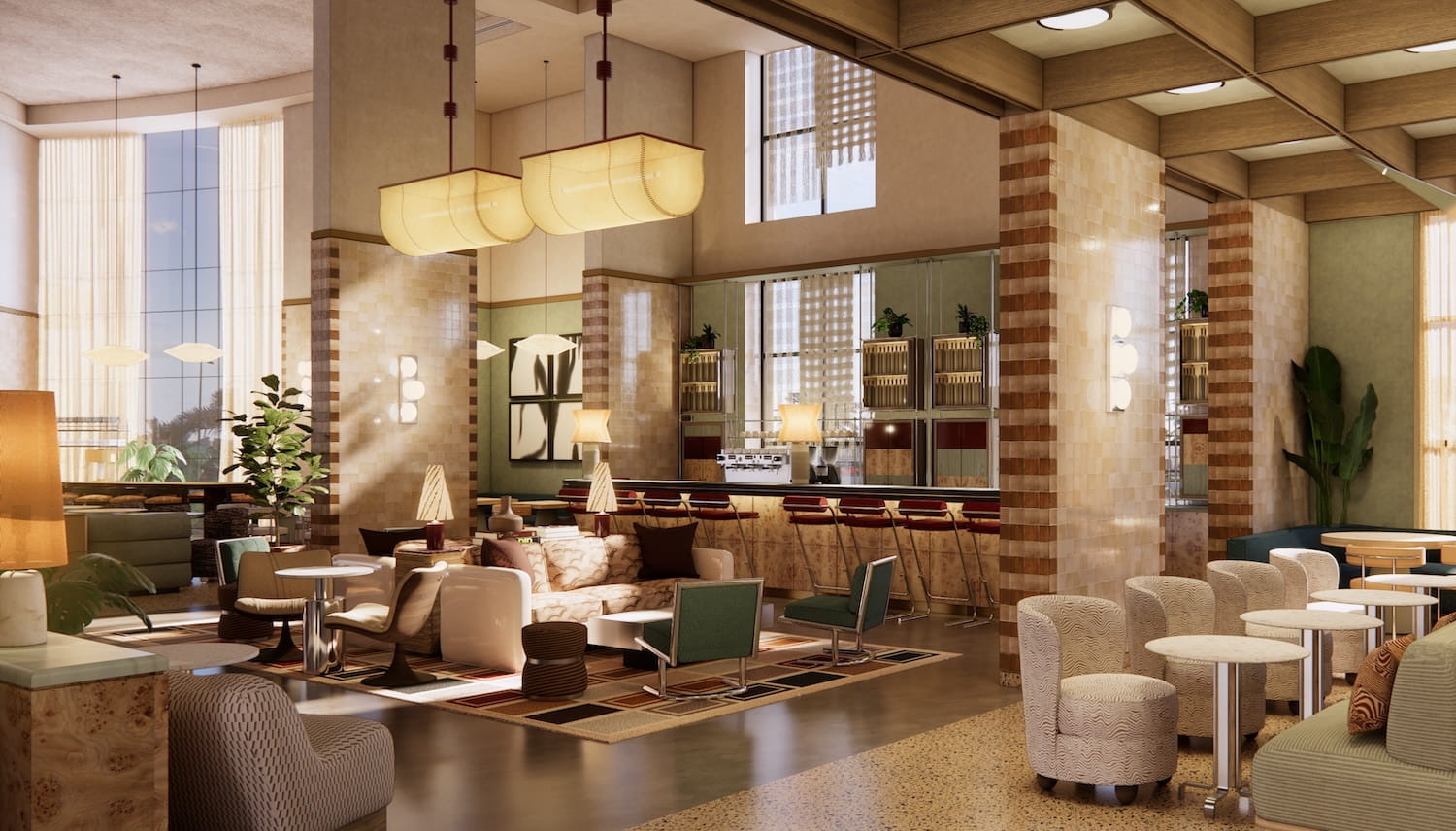
The restaurant closed for three months of renovation and reopened this year calmer and more grown-up. It has warm wood, softer lines and front-of-house staff in suits rather than aprons. It has become formal without becoming stiff, which is harder than it sounds. The service is quick without ever feeling rushed. Water glasses get filled before you notice they’re empty. And every so often the owner turns up at your table, not because he’s been told to but because he apparently wants to know whether you liked the scallop.
That, we think, is the whole secret. Hospitality is not a script. It depends on whether the person whose name is on the building still cares what happens inside it. Here it does, very obviously and in plain sight.
One more thing…
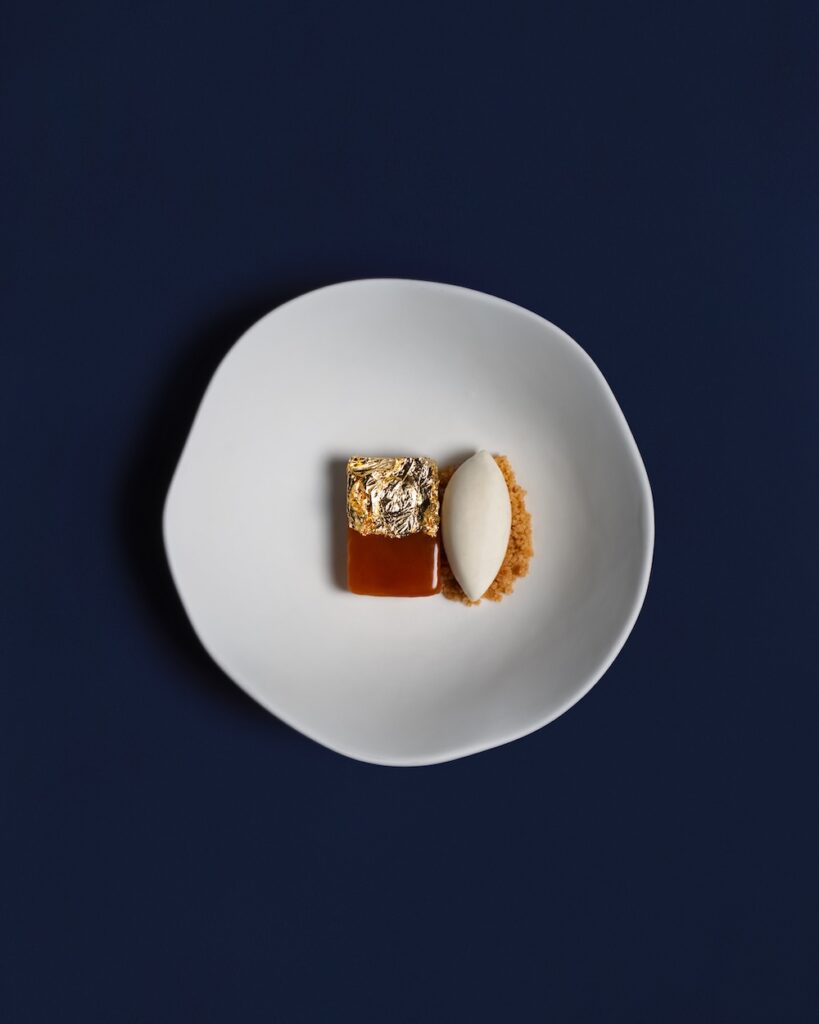
The menu card only arrives at the very end, tucked in with a chocolate éclair to take home. The choux is perfectly presented and the éclair lasted about as long as the taxi ride. The card’s final line reads “one more thing…”. We assumed that meant a final sweet, and it did, after the OB dessert from the upstairs pastry kitchen. But the real “one more thing” was Mohamad himself, who walked us through the kitchen at the end of the meal.
First came the fermentation lab, the engine room behind both the menu and the pairing. Here they brew garums from tuna and beef and tamaris from corn and onion. Leftovers from one dish become the seasoning for another, or end up in your glass. It looks like a cross between a laboratory and a Levantine grandmother’s pantry, and it goes a long way to explaining why nothing on the menu tastes quite like anything else in the city.
Then he took us across to Three Bros, the brothers’ 22-seat sibling in the same complex. It has maroon walls, a patterned floor, a wood-fired oven and bronze sculptures of the three brothers on the walls. If Orfali Bros is the dinner party, Three Bros is the kitchen at 1am, and it’s clearly where the burgers and pizzas from the original menu went to retire.
Orfali Bros holds a Michelin star. It was named the best restaurant in the Middle East and North Africa three years in a row, a first for that list, and it has placed on The World’s 50 Best Restaurants list. Mohamad is also a partner in Manāo and cooks at festivals and collaborations well beyond the Gulf, acting as a kind of unofficial ambassador for the region’s food. The awards are all deserved, but they aren’t really the point. The point is that we came away wanting to visit a city we have never seen, because three brothers cooked it for us so vividly. Very few restaurants anywhere can do that.
We’ll go to Aleppo one day. Until then, there’s a table in Jumeirah.
Orfali Bros, Wasl 51, Jumeirah 1, Dubai · orfalibros.com




discuss
Email
Pin
Tweet
Share