
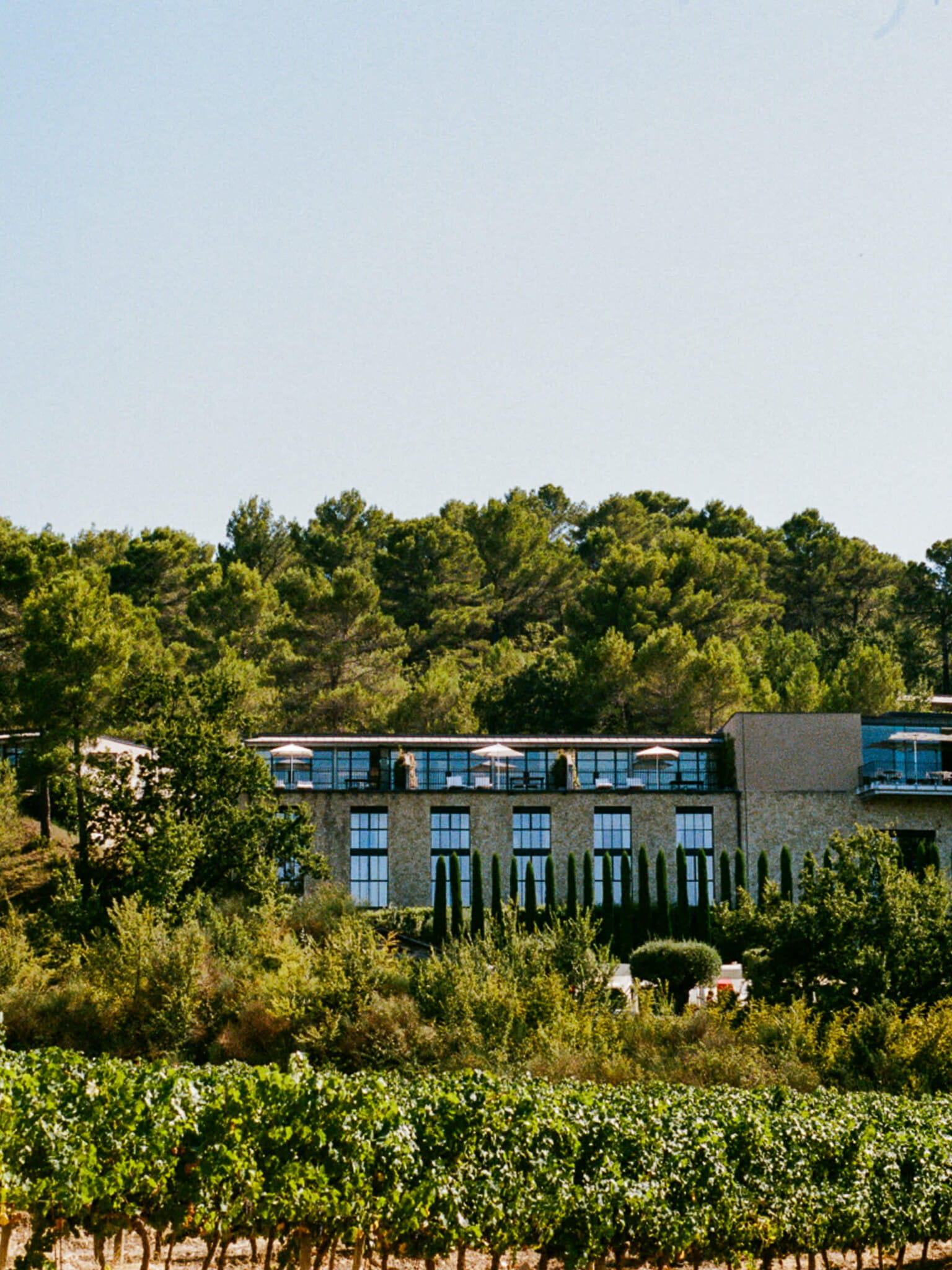
Drive over from the Côte d’Azur – 90 minutes, no more – and somewhere past Aix the landscape changes register entirely. The roads narrow and begin to wind; thick forest closes in, then breaks open onto vineyards and rugged hills. This is the Luberon, and it is everything the coast is not: peaceful, wild-edged, unbothered. Road signs grow scarce – Marseille, a scatter of villages – with one telling exception. Château La Coste has its own.
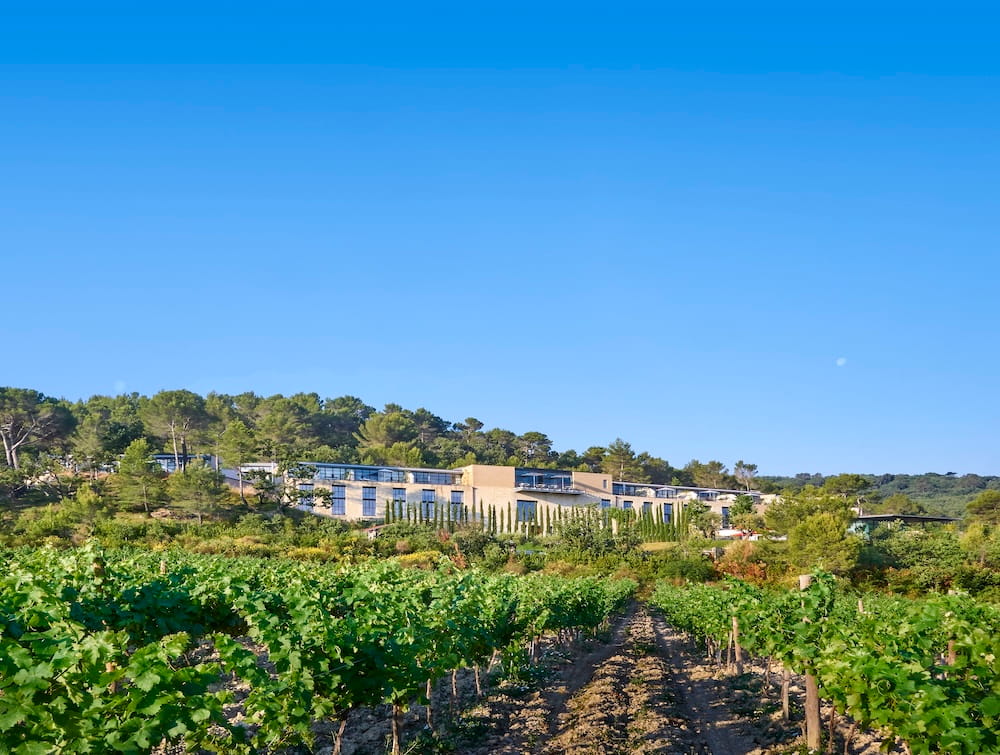
Then the gate: a grand, almost brutalist concrete entrance that announces itself with the confidence of a museum, opening onto a long, immaculately manicured drive. The estate unfolds around you as you climb – sculptures rising from the vines, installations glinting between the pines, and in summer, the crowds they draw: tour groups, couples, friends making a day of it. You bypass all of it. Past what appears to be a small traditional French village, then up and up around the hillside until, at the very top, you reach a private enclave the day-trippers never see. A pair of Defenders idle on the drive. Welcome to Villa La Coste.
Some context, because the scale defies belief: Château La Coste is a working biodynamic wine estate – famous above all for its rosé – laid over roughly 200 hectares, which makes it about the size of Monaco. Across it are scattered galleries, exhibition spaces, a winery, restaurants, a second hotel, and an open-air collection of art and architecture assembled over two decades by one man: Paddy McKillen, the Irishman who built modern Maybourne – Claridge’s, The Connaught, The Berkeley.
Villa La Coste is his baby, and it feels precisely like what it is: a billionaire hotelier’s dream hotel, built without a shareholder in sight, exactly as he wanted it. It also carries the spirit and generosity of everything we love about Maybourne. But this is not a flashy city or Riviera town hotel. It is a private hideaway for people who have done Saint-Tropez and the Croisette and now want the opposite: idyllic countryside, total privacy, absolute perfection.
The location – 10/10
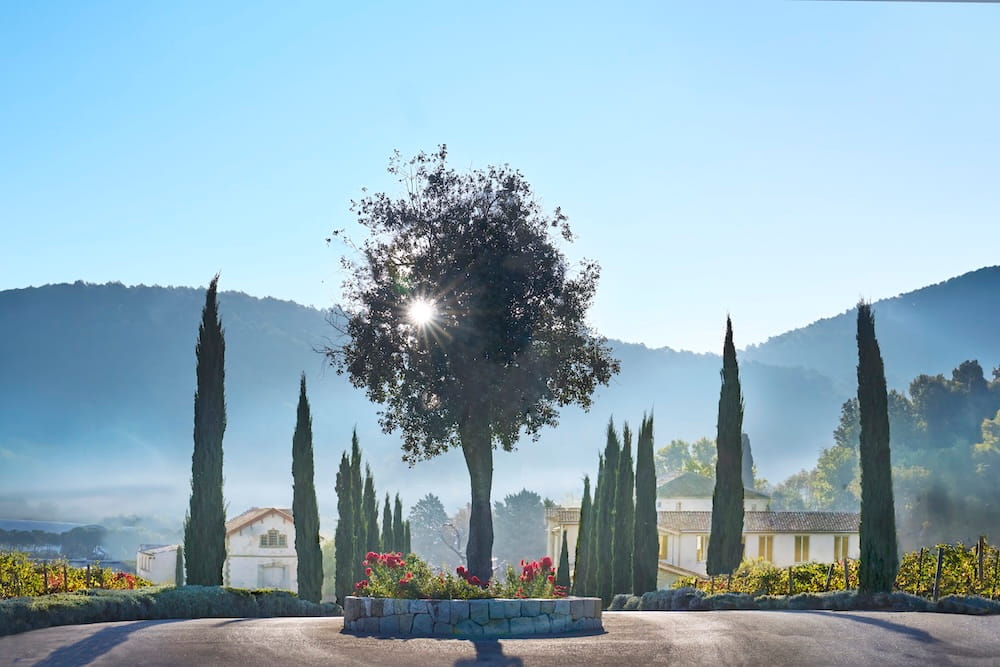
Twenty minutes from Aix-en-Provence, 50 minutes to Marseille, and under an hour from the coast, and a world from each. The nearest village, Le Puy-Sainte-Réparade, is sleepy; the neighbouring one, Puyricard, has a famous chocolate factory; and that is rather the point. You come here to stay put – and the estate makes leaving genuinely unnecessary, with wine, art, culture and eight restaurants within its own walls. A Defender or buggy collects you from dinner on request; complimentary bikes cover the rest.
The design – 10/10
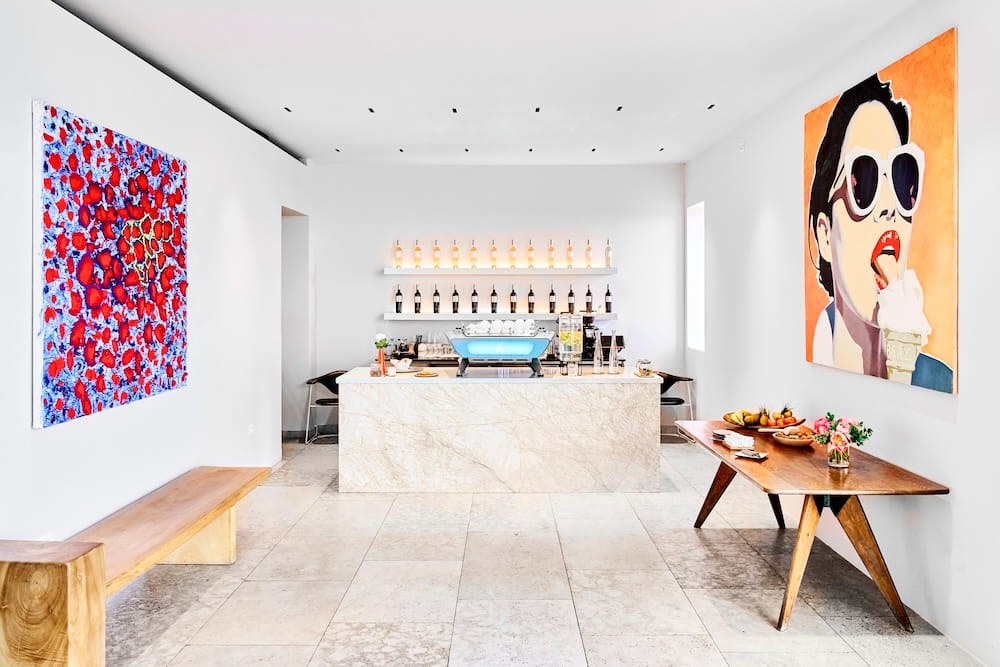
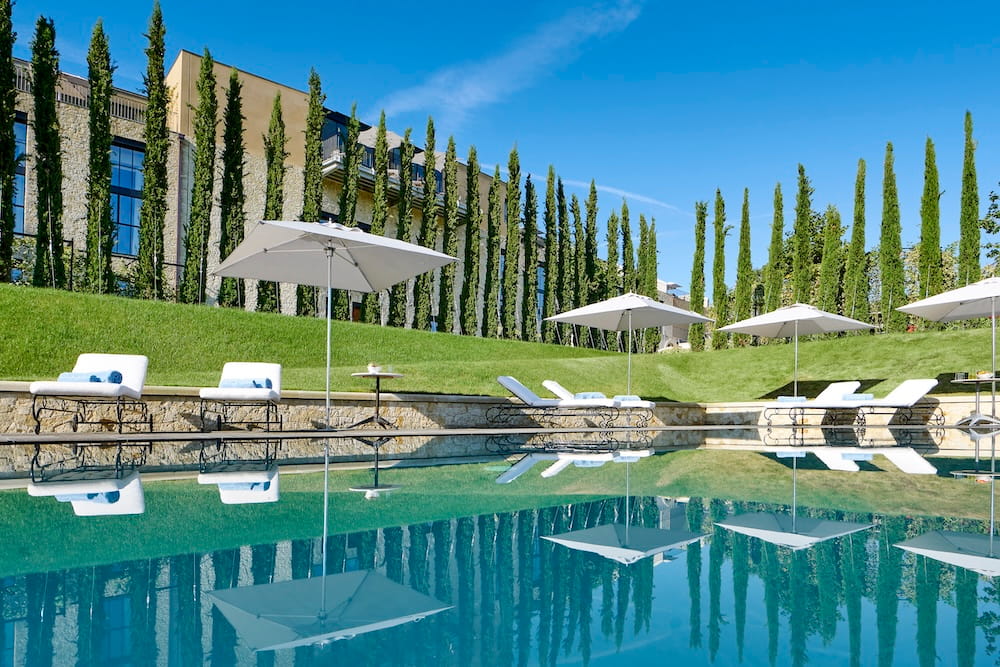
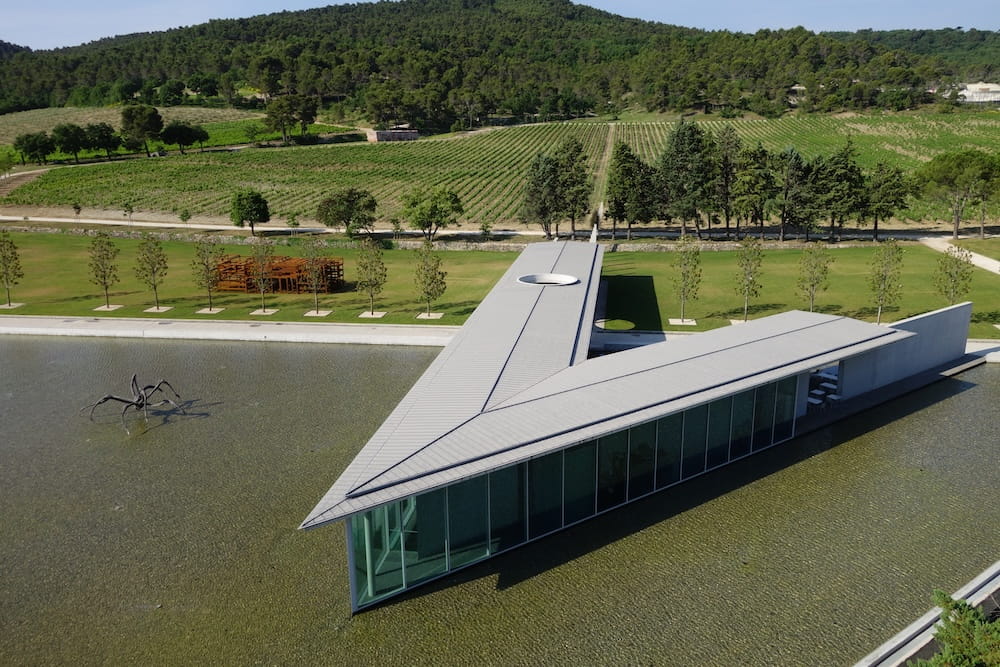
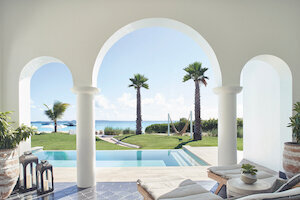
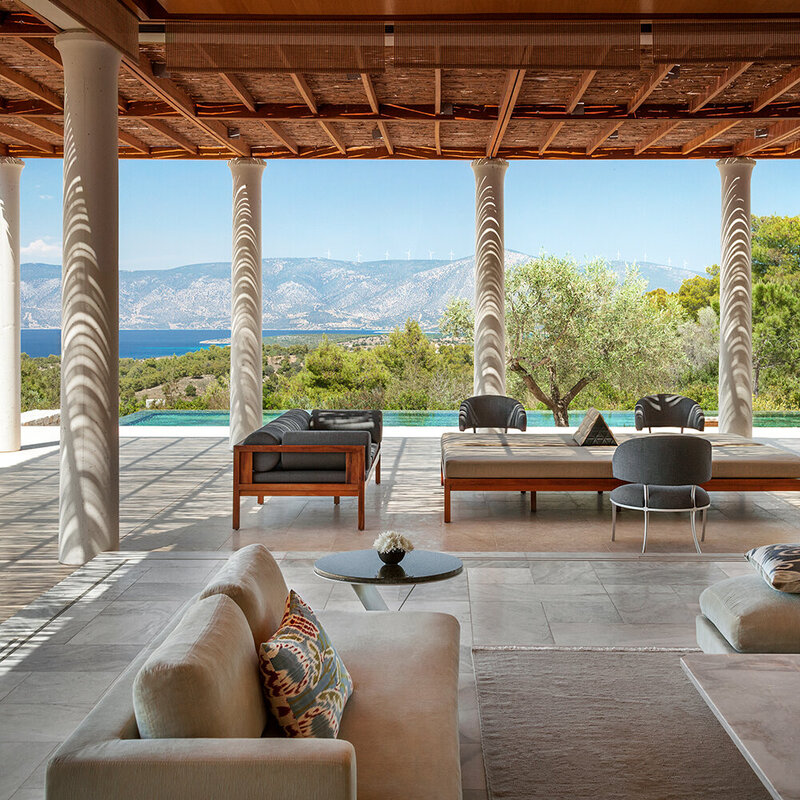
The hotel, by Aix architects Tangram, is full of crisp restraint: whitewashed walls, slate grey, gauzy white cotton drapes, sleek architectural lines – a world-class city-grade five-star dropped, improbably, into rugged Provençal greenery, and somehow in complete harmony with it. Think tropical modernism, in the South of France. The interiors of its key spaces – the salon, bar, library, spa and the glass pavilion now housing Louison – are the work of Hong Kong architect André Fu, and, tellingly, the designer behind much of The Berkeley and The Emory in London. Fu conceived it all to feel like a private collector’s maison, and it does – the main salon is a gallery-like space with floor-to-ceiling panoramic windows over the Luberon hills and the pool, filled with McKillen’s own finds: midcentury armchairs, lamps, art and objects. Most recently Fu added the duplex Suite Residences, all pippy oak, raw linen and rooms built around Provence’s famously peachy light. The whole property reveals itself in layers – you cannot see it all from outside, which only adds to the sense of a beautifully designed secret lair.
The villas – 10/10
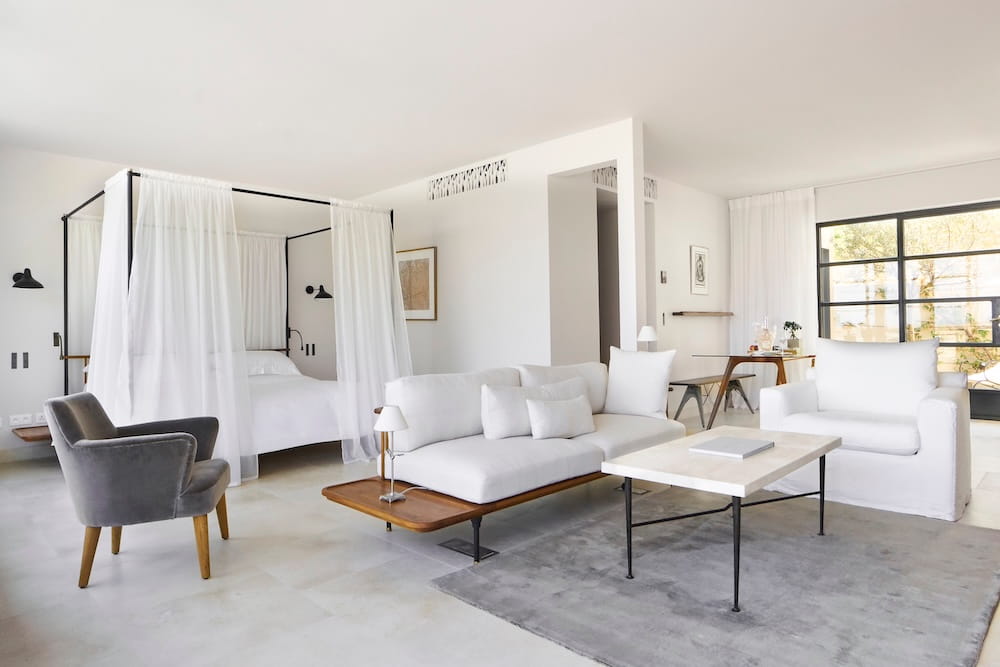
Suites only here – no rooms – and they are among the most beautiful we have ever stayed in, anywhere. Categories run from the Villa Suite King, without a pool, through Pool Villa Suites and two-bedroom Pool Villas built for families – huge living areas, terrace, private pool – up to the Suite Residences at the heart of the building: proper private apartments with living and dining rooms, two bedrooms, walk-in wardrobes and five-metre ceilings, their glass doors opening onto vast terraces over the vines and the Luberon mountains.
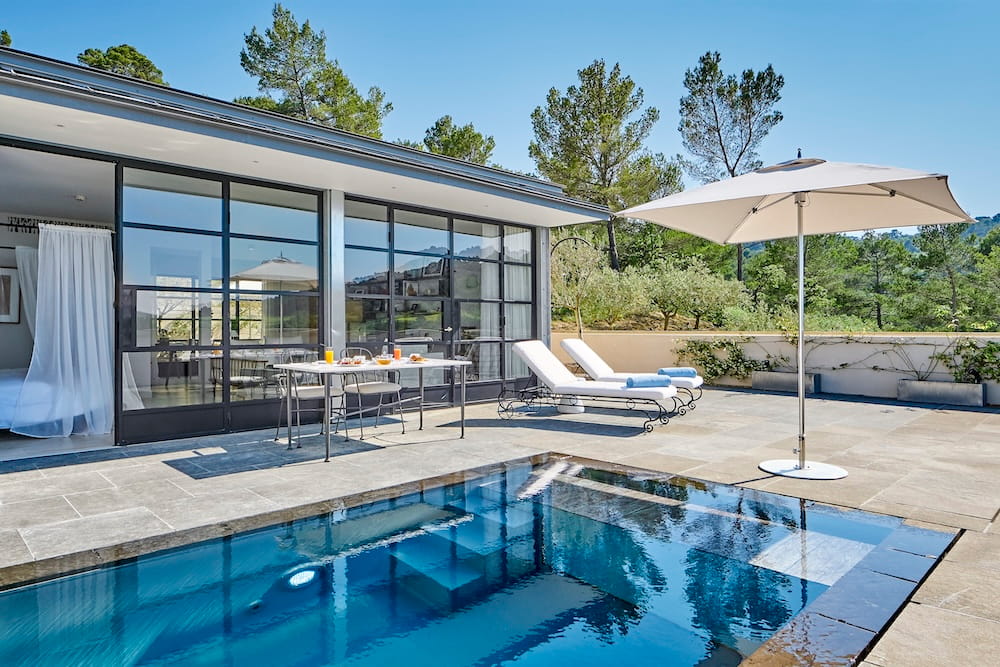
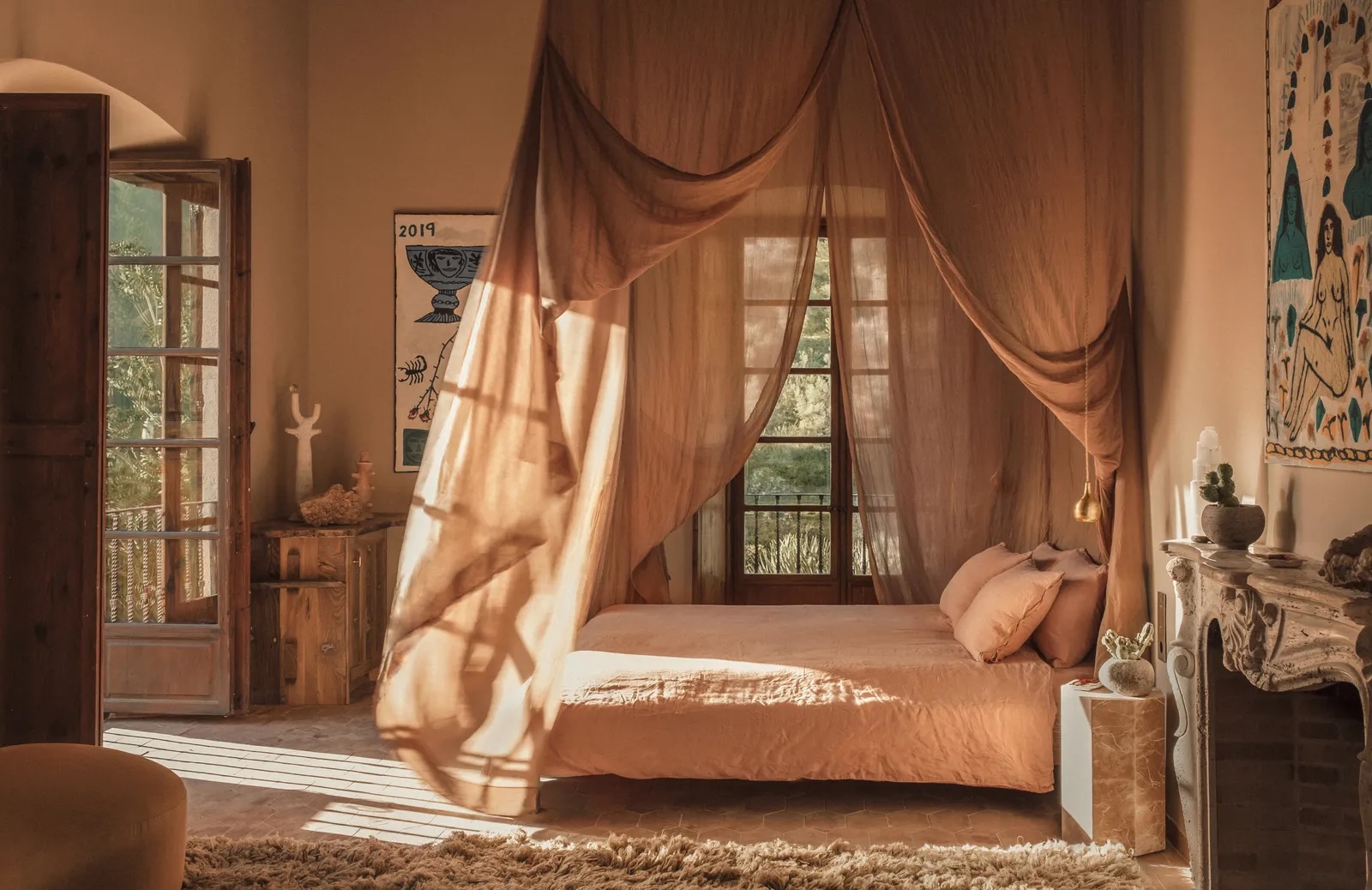
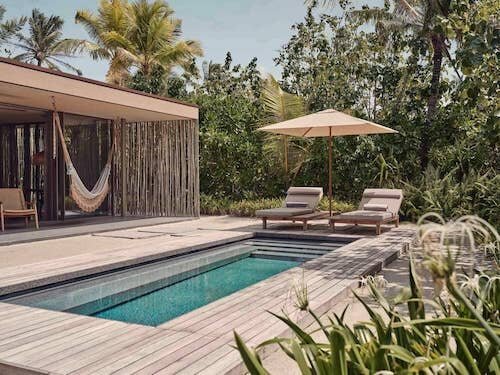
We stayed in a Pool Villa Suite on the upper level: an intimate, contemporary world of its own, with a sitting area, a king four-poster wrapped in gauzy drapes, a walk-in dressing room, a dining area, and a small courtyard leading to a terrace with private pool – kept beautifully warm – looking out over olive trees to the valley. The marble bathroom is flooded with natural light: double vanity, walk-in shower, a deep marble tub and separate WC. More than once we said to each other: if we ever had a place in the South of France, this is exactly what it would look like.
What separates these villas is how personal they feel: framed family photographs of McKillen’s friends and family, original art on the walls, notebooks, table lamps and knick-knacks most hotels would be too afraid to include. They read as little homes rather than hotel rooms. There is no telephone – a genuine breath of fresh air – with everything handled over WhatsApp, and unlike the many hotels that promise this and fail, replies land instantly and coffee arrives in moments. The minibar of soft drinks is complimentary and comes with bottles of the estate’s own wine; the coffee is a local roast decanted into Nespresso pods; wardrobes hold a steamer, a yoga mat and everything else; robes and slippers are the fluffiest we’ve encountered; and the gently fragranced bathroom amenities are by the same used at Maybourne Riviera’s launch. McKillen’s well-oiled fingerprints are everywhere, and gladly so (I loved the hair masque over conditioner, which was great for sun damage).
Food & drink – 10/10
Breakfast is served in that gallery salon or on its sun-drenched terrace, gazing over the hills to distant hilltop villages: a beautiful spread of pastries, fresh fruit, cold cuts and cereals from local producers, plus any eggs you like, proper coffee and healthy juices – pure Maybourne finesse. Taken in your villa, the scrambled eggs arrive strewn with herbs from the garden.
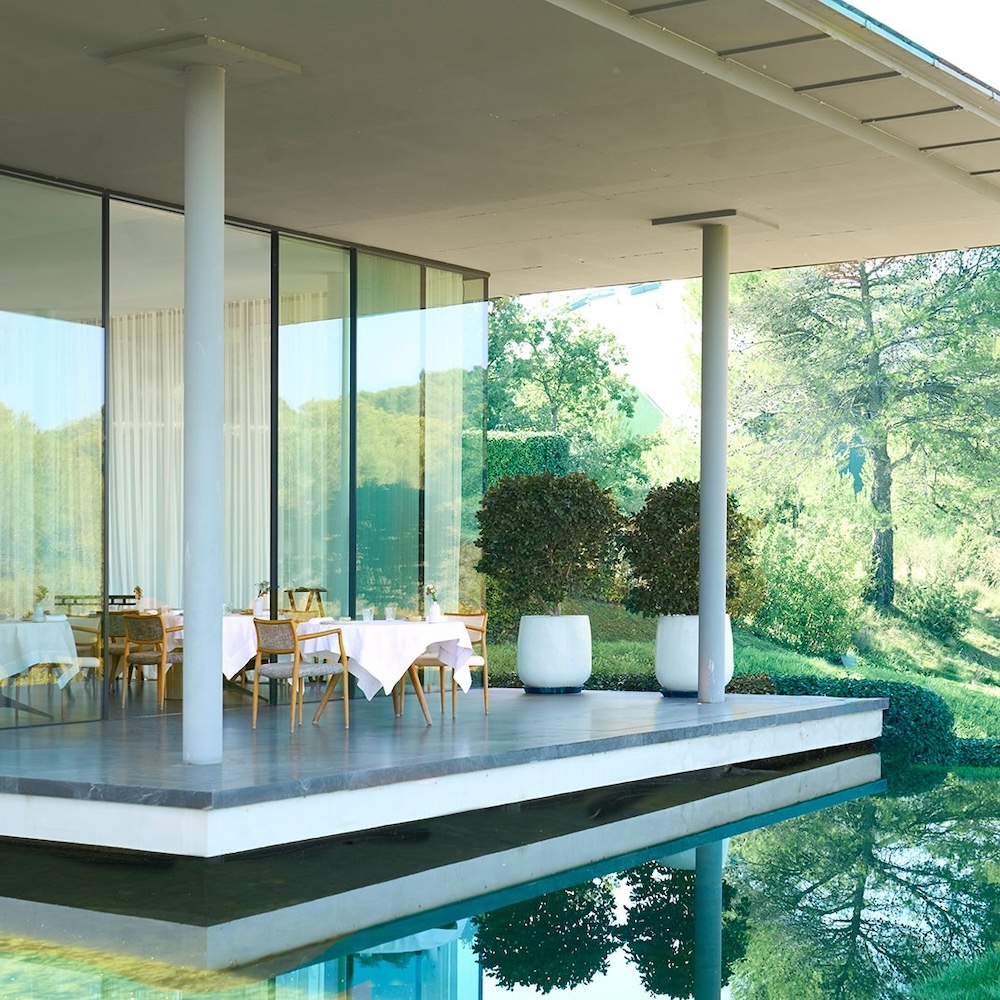
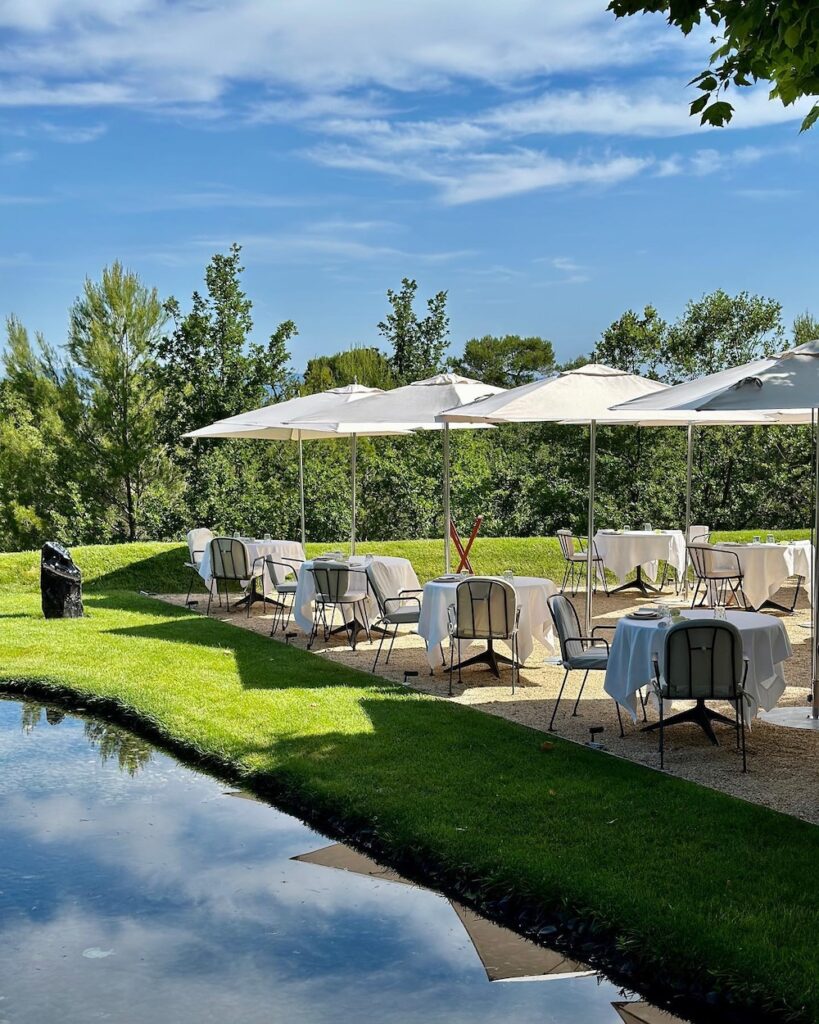
The serious statement is Louison, the gastronomic restaurant newly under Florent Pietravalle, the young chef who won a Michelin star at Avignon’s La Mirande and arrived this March with fifteen of his own brigade. Named for Louise Bourgeois’s nickname – her work hangs in the room – it occupies a glass pavilion looking onto the grounds; dinner starts with an aperitif outside before moving in, and the effect is pure Glass Onion, in the best way. Pietravalle’s cooking is Provence rewritten – a pissaladière of year-matured anchovies, lamb with hillside herbs – across tasting menus of four to eight courses (EUR 135–225) or à la carte, with sommelier Antoine Petrus overseeing the cellar and the estate’s wines alike. Pietravalle also runs Les Jardins, the more relaxed but still refined lunch spot under the trees below – a delicate Niçoise salad, a beautiful little steak, a glass of the estate’s rosé – we we enjoyed under the trees.
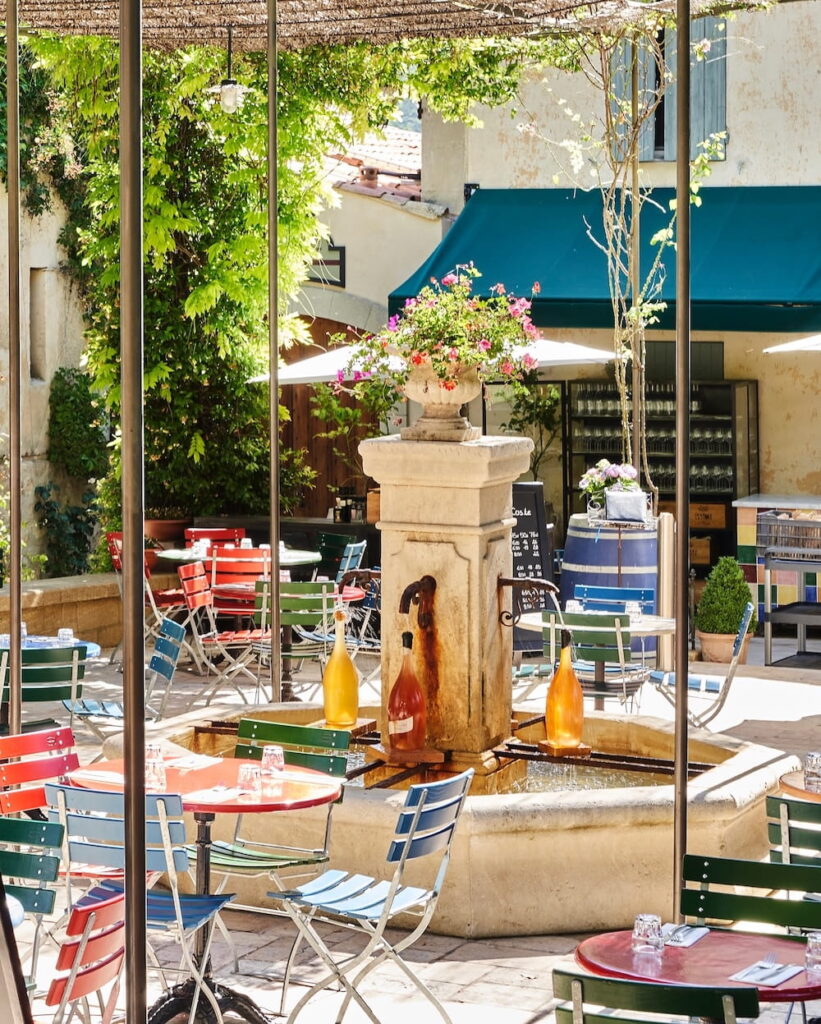
Then there is the village. A short walk or Defender ride down the hill sits the public heart of the estate and Auberge La Coste, its second hotel – charming, rustic, Provençal where the Villa is architectural, built like a hamlet you happen to be living in. For Villa guests this is the unique selling point: come evening you descend for dinner among a real crowd – locals, day visitors, a proper buzz – choosing between Francis Mallmann’s Argentinian grill (packed when we visited, flames roaring, bar humming), the Tadao Ando Café, La Terrasse Provençale, L’Italien and La Rotisserie, new last year. It feels like eating out in a French village square rather than at a hotel – something almost no luxury property anywhere can offer. There’s even a charming pub, which was showing the World Cup.
The art & the estate – 10/10
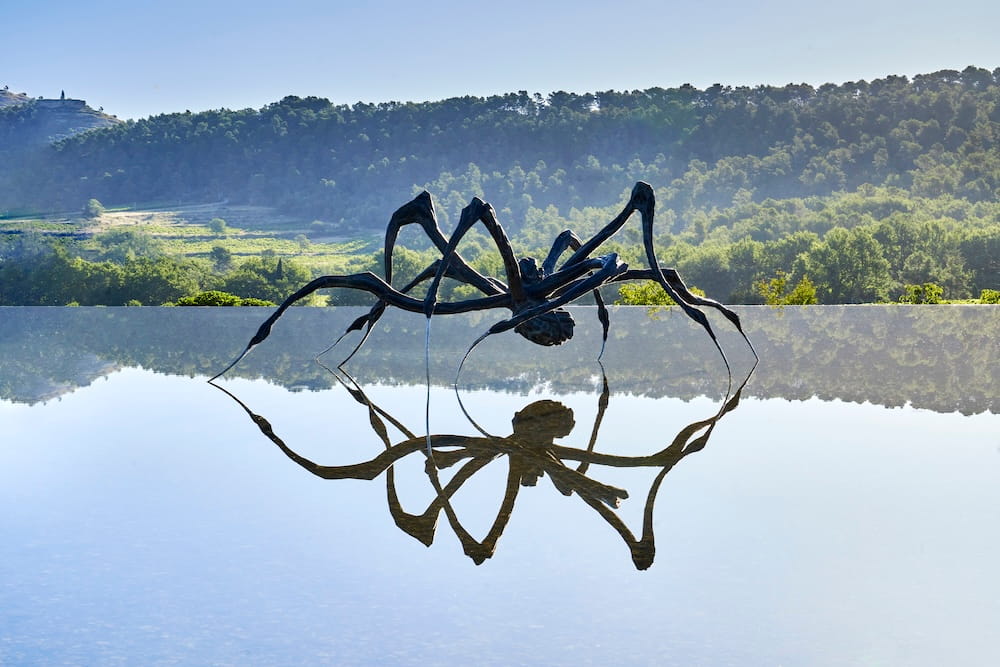
Villa La Coste is, in effect, a livable museum. The permanent trail scattered across the parkland reads like a private Venice Biennale: Louise Bourgeois’s Crouching Spider over the water, Tadao Ando’s chapel and art centre, pavilions by Renzo Piano and Richard Rogers, Frank Gehry, Jean Nouvel’s winery, Oscar Niemeyer’s final building, works by Ai Weiwei, Tracey Emin, Alexander Calder, Damien Hirst, Bob Dylan and Yoko Ono among them. The estate runs residencies – Julian Schnabel was in residence during our stay, his five-decade survey filling the Galerie des Anciens Chais until mid-August – and the summer brings Rashid Johnson and Sheree Hovsepian to the Niemeyer auditorium, with Yoshitomo Nara’s serene white bronze heads newly installed on the lawns. Day visitors book tours; Villa guests roam it all freely, Defender on call.
Spa, pool & facilities – 9/10
Down a level – the lair keeps descending – is the spa: soft forms, bouclé and pale wood, treatment rooms looking onto the same rolling vineyard hills, plus sauna and hammam, with an art installation at its entrance because of course there is. Treatments use personalised clays, mineral salts and plant oils [confirm current treatment brand partner]. The main pool is flanked by trees on its own hillside terrace overlooking the winery, with cabanas and exactly the right temperature. The gym is compact but well-judged – Technogym kit including a Kinesis station and treadmill, enough to see out a week – and the boutique deserves a detour: clothes, crockery, sunglasses and elegantly curated finds sold nowhere else.
The verdict – 10/10
We stayed two nights and spent both wishing it were ten – and we will be back next year. Villa La Coste is what happens when the man behind the world’s best hotels builds one purely for love: a place with no telephone, no scene and no missteps, where the guests are quiet, the design is flawless and an entire Monaco-sized world of wine, art and fire-cooked dinners waits outside your villa. The Côte d’Azur has the glamour. This is where you go afterwards.
Villa La Coste, Le Puy-Sainte-Réparade; suites with breakfast from around EUR 1,200 including breakfast; villalacoste.com

Dubai-based Isabella Craddock is the founder of Near+Far, a founding Academy Chair for The World’s 50 Best Hotels, former Condé Nast Traveller editor and a hotel-obsessed, design-devoted travel planner—for friends, loved ones, and readers alike.




discuss
Email
Pin
Tweet
Share